
Actual Cash Value vs Replacement Cost in Home Insurance
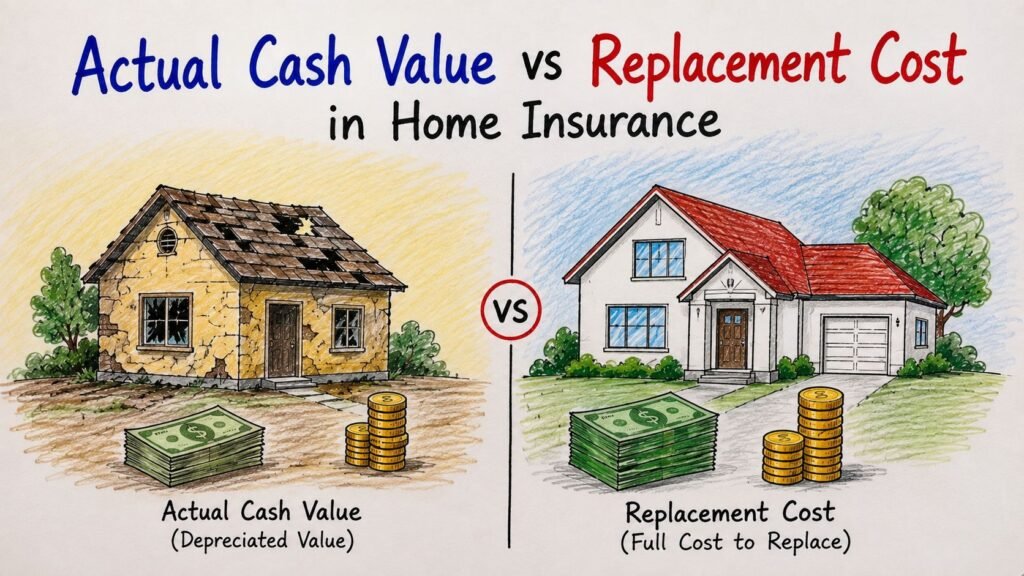
Actual Cash Value vs Replacement Cost in Home Insurance Actual Cash Value vs Replacement Cost in Home Insurance : Buying a home insurance policy is the best way to safeguard your biggest financial investment. However, many homeowners feel completely confused when they look at the fine print of their paperwork. Knowing how your insurance company calculates your payout before a disaster strikes can save you thousands of dollars. What is Actual Cash Value vs Replacement Cost in Home Insurance? The main difference between Actual Cash Value vs Replacement Cost in Home Insurance comes down to asset aging and wear. Replacement cost covers the full financial expense of buying a brand-new item or rebuilding your house at current market prices. Actual cash value only pays out the item’s current worth after subtracting deductions for age, wear, and tear. Table of Contents Deconstructing Replacement Cost Valuation Demystifying Actual Cash Value Claims The Role of Home Insurance Depreciation Real-World Claim Scenarios and Differences Key Differences in Property vs Structure Payouts Smart Pro Tips for Choosing Your Coverage Cost Pitfalls and Common Mistakes to Avoid Frequently Asked Questions (FAQs) Deconstructing Replacement Cost Valuation When you opt for Replacement Cost Home Insurance for your dwelling structure, you choose peace of mind. This type of coverage ensures that if your house burns down, the insurer pays to rebuild it. The calculation uses modern material costs and labor charges without factoring in how old the house was. This setup is highly beneficial for the physical structure of your building. If your ten-year-old wooden floors get damaged by a burst water pipe, the insurer pays for new floors. You don’t need to account for how much the wood has lost in value over the past ten years. Understanding Actual Cash Value Claims Actual Cash Value Home Insurance bases your claim payment on the property’s value at the time the damage occurs. The insurer generally considers factors such as the property’s age, condition, and normal wear and tear when determining the amount you may receive. works like standard car insurance. The company determines what your item was worth right before the accident happened. This calculation significantly lowers your final check if your items are older. Most budget-friendly policies default to this model to keep their operational costs low. It saves you money on your monthly bills but can create a massive financial shock during a major crisis. You must cover the remaining balance yourself to get back to a normal life. The Role of Home Insurance Depreciation To truly understand how these payouts operate, you must understand the concept of Home Insurance Depreciation. Depreciation is the natural drop in an item’s monetary worth due to regular wear, tear, usage, and age. Every material, from your living room television to your backyard fence, depreciates every single year. Insurance adjusters use internal life expectancy tables to figure out these exact deduction rates. For instance, if a standard laptop is expected to last five years, it loses twenty percent of its value annually. This hidden calculation is why ACV policies can feel unfair during a crisis. Real-World Claim Scenarios and Differences Let us look at a clear practical example involving a major living room electronic item. Imagine a lightning strike destroys your five-year-old television, which originally cost one thousand dollars. Buying a brand-new television with the same specifications today still costs one thousand dollars. If you have a policy based on Replacement Cost vs Actual Cash Value, your payout varies wildly. An RCV policy cuts you a check for the full one thousand dollars to buy a new television. An ACV policy calculates that the television lost fifty percent of its value over time and pays you only five hundred dollars. Key Differences in Property vs Structure Payouts Most standard home insurance plans use a combination of both calculation formats. Your main dwelling structure is usually insured under an RCV setup to ensure you can rebuild your walls. However, your personal belongings inside the rooms are often settled using the ACV vs RCV Home Insurance rule. If you own high-end items like luxury couches, sound systems, or expensive sports gear, the default ACV coverage is rarely enough. Upgrading your personal property section to an RCV model ensures your belongings get the same high-level protection as your roof. Smart Pro Tips for Choosing Your Coverage Create a Home Inventory: Photograph your electronics, furniture, and appliances along with their model serial numbers to prove their initial condition. Review Your Roof Guidelines: Many insurance companies change roof coverage from RCV to ACV once the shingles cross fifteen years of age. Read the Endorsements: Ask your agent for a “Contents Replacement Cost” rider to upgrade your belongings without changing your entire policy. Cost Pitfalls and Common Mistakes to Avoid Focusing Only on Premium Costs: Choosing a cheap ACV policy to save ten dollars a month can cost you thousands later during a fire claim. Forgetting About Inflation: Rebuilding costs rise over time due to labor issues. Ensure your replacement cost limits automatically adjust for inflation. Misunderstanding Deductibles: Your deductible always applies first. If your ACV payout is eight hundred dollars and your deductible is five hundred, your check will be just three hundred dollars. Frequently Asked Questions (FAQs) Q1: Can I upgrade an existing ACV policy to an RCV policy?Yes, most insurance providers allow you to add an endorsement or rider to upgrade your personal belongings coverage to replacement cost for a slight premium increase. Q2: How do insurers calculate the depreciation on a roof?Insurers look at the average life expectancy of the roofing material and subtract value based on its age. A twenty-year shingle roof that is ten years old loses half its value. Q3: Is it better to have Actual Cash Value vs Replacement Cost in Home Insurance for old homes?Replacement cost is highly recommended for older homes because historic materials, plaster walls, and custom woodwork cost significantly more to replicate today. Q4: Does replacement cost coverage pay for matching undamaged items?Generally, no. If
What does homeowners insurance cover and not cover in the USA?

What Does Homeowners Insurance Cover and Not Cover in the USA? What does homeowners insurance cover and not cover in the USA? : Buying a home is one of the largest financial investments you will ever make. Protecting that investment means choosing a solid insurance policy to shield your property from unexpected disasters. Understanding Your Policy Scope What does homeowners insurance cover & not cover in the USA? A standard homeowners policy covers structural damage from fire, lightning, windstorms, and theft up to your policy limits. However, it explicitly does not cover damage caused by sudden floods, earthquakes, regular wear and tear, or intentional neglect. What does homeowners insurance cover and not cover in the USA? Table of Contents The Basics of Property Safety Nets What Does Homeowners Insurance Cover in the USA? The Core Pillars of Home Protection What Is Not Covered by Homeowners Insurance? The Truth About Theft and Water Accidents Navigating Complex Policy Exclusions Real-World Protection Scenarios Pro Tips for Maximizing Your Policy Value Common Homeowner Insurance Mistakes Frequently Asked Questions (FAQs) The Basics of Property Safety Nets Many new property buyers assume that their standard policy protects them from every single type of damage under the sun. This is a highly dangerous assumption that can lead to massive financial ruin after a major storm. Insurance policies are legal contracts built on specific definitions. Knowing exactly where your coverage stops allows you to purchase separate add-ons or riders before a major disaster hits your neighborhood. What Does Homeowners Insurance Cover in the USA? A typical HO-3 policy, which is the most common option across the country, offers broad protection against a specific list of perils. Understanding what does homeowners insurance cover in the USA helps you file successful claims when accidents happen. Your coverage generally safeguards your main house, detached structures like fences or sheds, and your personal items. It also protects your personal savings if a guest gets hurt on your property and decides to file a lawsuit against you. The Core Pillars of Home Protection When you look at your policy statement, you will see specific dollar limits assigned to different categories. Each category handles a unique aspect of your living situation. Homeowners Insurance Coverage for Property Damage The structural part of your policy focuses on rebuilding costs. Standard homeowners insurance coverage for property damage pays to repair your roof, walls, and flooring if a sudden tree falls during a windstorm or if a sudden fire damages your kitchen area. It also includes Loss of Use protection. If a kitchen fire makes your house completely unlivable, your insurance company will pay for your temporary hotel stay and restaurant meals while repairs take place. What Is Not Covered by Homeowners Insurance? The exclusions section of your policy document is just as important as the coverage section. Reviewing what is not covered by homeowners insurance keeps you from getting your claims rejected. Standard policies do not pay for issues that develop slowly over time. If your roof leaks because it is thirty years old and rotting, your insurance provider will expect you to pay for the repairs out of your own pocket. The Truth About Theft and Water Accidents Water and theft are the two most misunderstood categories in the property protection industry. Let let us answer the common question: does homeowners insurance cover theft and water damage properly? Your policy covers theft of your personal electronics and furniture, even if the items are stolen from your car while traveling. For water issues, it covers sudden accidents like a burst washing machine pipe, but it never covers regional rising floodwaters or blocked street sewers. Navigating Complex Policy Exclusions Every standard insurance company maintains a specific list of hazards that require separate specialized coverage. These are known as homeowners insurance exclusions in the USA market. Earth movements, including sinkholes and landslides, are completely excluded from basic plans. If you live in a coastal area prone to hurricanes or an area with heavy earthquake activity, you must buy separate windstorm or earthquake policies. Real-World Protection Scenarios Let let us look at a practical example. A lightning bolt strikes your roof during a summer storm, fried all your kitchen appliances, and caused a minor fire. In this scenario, your policy pays for the roof repairs and replaces your damaged appliances minus your standard deductible. Now imagine a different scenario. A massive storm causes a nearby river to overflow, sending two inches of muddy water into your living room. A standard policy will pay zero dollars for this damage unless you bought a separate policy through the federal flood program. Pro Tips for Maximizing Your Policy Value We highly recommend creating a detailed digital home inventory video once every year. Walk through every room with your smartphone camera, opening drawers and recording brand names of your valuable electronics to make future theft claims seamless. Review your dwelling coverage limits annually with your agent to match rising local construction costs. If the cost of wood and labor goes up in your town, your old insurance limits might not be enough to rebuild your home today. Common Homeowner Insurance Mistakes A frequent error is setting your deductible too low without looking at your monthly budget. While a lower deductible means less out-of-pocket cost during a claim, it can significantly raise your monthly premium payments. Another mistake is failing to report structural upgrades. If you remodel your basement or add a new deck, fail to notify your insurance company means those expensive new additions remain completely unprotected under your old policy limits. Frequently Asked Questions (FAQs) Does standard homeowners insurance cover mold damage? It depends entirely on the source of the mold. If the mold grew due to a sudden, hidden burst pipe that was reported immediately, it is usually covered; if it grew due to a long-term unmaintained bathroom leak, it is excluded. How do I protect my home from earthquake damage in the USA? You must purchase a separate earthquake endorsement
7 Crucial Things to Check Before Signing a New Homeowners Policy
7 Crucial Things to Check Before Signing a New Homeowners Policy 7 Crucial Things to Check Before Signing a New Homeowners Policy : Shopping for a fresh property protection policy is an excellent way to secure better customer support and trim down your fixed annual household bills. If you recently learned how to switch home insurance with a mortgage escrow account smoothly, you are likely looking over competitive market quotes right now. However, signing a new contract based on a cheap premium rate alone can leave your home highly vulnerable during a major disaster. To ensure your investment offers real protection, you must learn how to scan the fine print like an underwriter. Let us break down the essential review checklist, hidden insurance traps, and crucial coverage boundaries to secure your property safely. Quick Answer Of 7 Crucial Things to Check Before Signing a New Homeowners Policy Knowing the 7 Crucial Things to Check Before Signing a New Homeowners Policy keeps your household fully protected. Buyers must closely review the replacement cost setup, look for hidden policy exclusions, verify separate deductible limits for wind or hail storms, check liability boundaries, and match their mortgage bank escrow payment structures. Table of Contents Demystifying Dwelling Coverage and Replacement Costs Uncovering the Hidden Exclusions in Standard Policies Tracking Separate Storm Deductibles in the USA Structuring a Reliable Homeowners Insurance Coverage Limits Checklist Essential Questions to Ask Before Signing Home Insurance Frequently Asked Questions (FAQs) Demystifying Dwelling Coverage and Replacement Costs The absolute first step in understanding what to look for when buying homeowners insurance is checking how the carrier calculates your dwelling coverage. Your dwelling limit is the maximum dollar amount the company will pay to rebuild the physical structure of your house if a fire or storm destroys it completely. Many buyers confuse the market value of their home with its actual rebuilding cost. If local construction material prices or labor rates spike after a regional disaster, a basic policy might not pay enough to fix your roof. Always ensure your new contract includes “Extended” or “Guaranteed” Replacement Cost coverage rather than “Actual Cash Value” (ACV) to avoid heavy personal debt. Uncovering the Hidden Exclusions in Standard Policies Finding the right protection strategy requires looking past the glossy marketing ads. When comparing homeowners insurance policies, it is important to check what each policy does not cover. Many new homeowners are surprised to discover that certain losses may be excluded when they need financial help after an unexpected household emergency. there are several hidden things in homeowners insurance policy contracts. Standard HO-3 policies do not cover damage caused by flash floods, earthquakes, sinkholes, or continuous mold growth. If your house sits in a high-risk flood zone, you must buy a separate standalone policy to keep your property safe. Tracking Separate Storm Deductibles in the USA When you review your annual premium rates, look closely at the deductible numbers. Your deductible is the out-of-pocket cash amount you must pay the repair contractor before your insurance check handles the remaining balance. In many states across the USA, carriers use a split deductible system. While a regular fire claim might carry a comfortable $1,000 flat deductible, the policy might enforce a 2% or 5% percentage deductible for hurricane, windstorm, or hail damage. For a $300,000 home, a 5% deductible means you must pay $15,000 yourself before receiving any insurance help, which can strain your savings. Structuring a Reliable Homeowners Insurance Coverage Limits Checklist To ensure your new plan matches your real lifestyle assets, you should use a balanced review framework. Never sign a policy line without checking off these four essential protection categories. Use this basic homeowners insurance coverage limits checklist to verify your balances: Personal Property Boundaries (Coverage C): Ensure your electronics, furniture, and clothes are protected under a “Replacement Cost” clause rather than an ACV framework that subtracts value for old age. Loss of Use Protection (Coverage D): This fund pays for your temporary hotel stay and restaurant meals if a major fire forces your family out of the house during repairs. Personal Liability Safety (Coverage E): This shield protects your family savings and assets from medical bills if a guest slips on your icy driveway and decides to sue you. Essential Questions to Ask Before Signing Home Insurance Before giving your final electronic signature or processing a payment, use your phone to ask your agent some direct questions. This step is highly recommended to protect your budget from future claim denials. Review these top questions to ask before signing home insurance documents: “Does this quote include a separate endorsement rider to handle sudden sewage backup and sump pump failures?” “Are my expensive jewelry items and family heirlooms fully covered, or do I need to add a separate scheduled personal property rider?” “Will this specific policy format qualify for an automatic discount if I install smart smoke alarms and a ring doorbell camera system?” Common Mistakes to Avoid Hiding Your Dog’s Real Breed: Many insurance firms keep a restricted list of specific dog breeds they refuse to cover due to bite risks. Lying about your pet to secure a lower rate can cause your entire policy to be voided later. Skipping the Home Inspection Step: New providers routinely send an independent inspector to check your roof within 30 days of signing. If they find unrecorded damage, the company can cancel your coverage immediately. Choosing an Impractically High Deductible: Selecting a $5,000 deductible lowers your monthly bills, but it can trap you financially if you cannot afford that out-of-pocket expense during an emergency. FAQs Q1. What are the most important things to check before signing a new homeowners policy? The most important details to verify are the dwelling replacement cost type, separate wind/hail deductibles, water backup add-on endorsements, and hidden exclusions like flood or earthquake damage. Q2. How can I learn what to look for when buying homeowners insurance online? Focus on verifying that your personal property coverage uses replacement value rather than actual
How to Get a Pro-Rated Refund When You Cancel Home Insurance Early
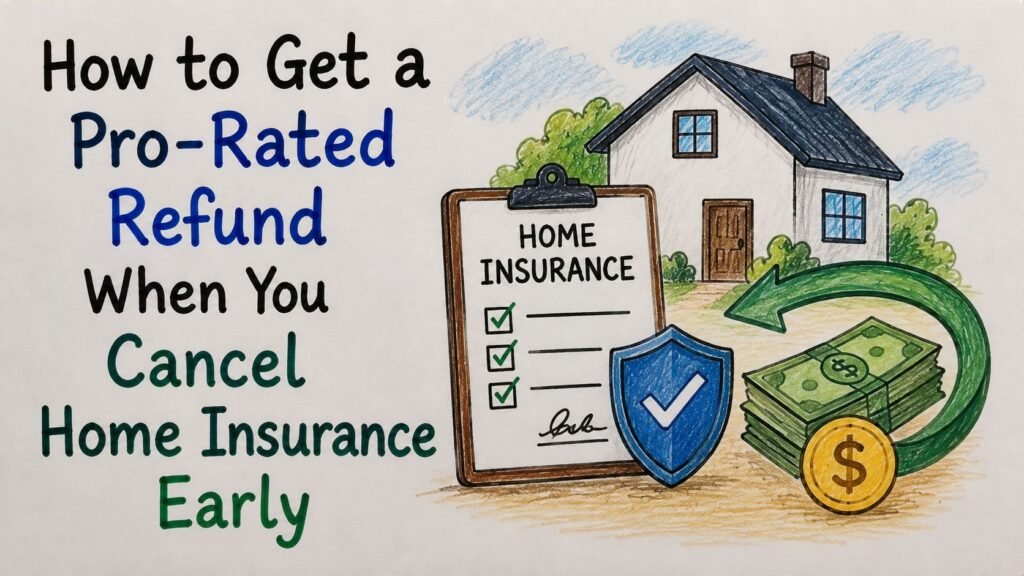
How to Get a Pro-Rated Refund When You Cancel Home Insurance Early How to Get a Pro-Rated Refund When You Cancel Home Insurance Early: Changing your property insurance carrier before your official expiration date is an excellent way to balance your household budget. Many property owners shop around for alternative market rates and switch providers mid-term to maximize their savings. If you originally paid your entire annual premium upfront, you do not have to leave that remaining cash balance with your old provider. Securing your unused premium returns requires following specific paperwork rules and submission channels. Let us explore the inner mechanics of premium calculations, cancellation rules, and how to get your money back smoothly. Quick Answer Of How to Get a Pro-Rated Refund When You Cancel Home Insurance Early Learning How to Get a Pro-Rated Refund When You Cancel Home Insurance Early requires sending a formal signed cancellation letter to your insurance carrier. This legal request forces the provider to return every single dollar back for the remaining unused days on your insurance cycle calendar, protecting your unearned consumer premium rights. Table of Contents What is a Pro-Rated Home Insurance Refund After Cancellation? Breaking Down Homeowners Insurance Cancellation Refund Rules How to Get a Home Insurance Refund After Cancellation Why You Should Cancel Home Insurance Before Renewal Refund Navigating the Home Insurance Cancellation Refund in the USA Common Pitfalls That Delay Your Premium Payback Frequently Asked Questions (FAQs) What is a Pro-Rated Home Insurance Refund After Cancellation? When you buy property protection, you are essentially paying for protection in advance. For example, if your annual property premium is $1,200, you are effectively paying exactly $100 for each month of active coverage. A Pro-Rated Home Insurance Refund After Cancellation ensures that if you decide to cancel after exactly six months, the carrier cannot keep the remaining amount. The unearned premium balance belongs to you by consumer law, and the firm must return it back to your wallet. Breaking Down Homeowners Insurance Cancellation Refund Rules Before celebrating your calculated cash return, you must read the policy guidelines in your contract. Insurance carriers follow two distinct methods to handle early exits. The Pure Pro-Rated Return Calculation This is the most customer-friendly option. If you drop your plan with 100 days remaining on your contract, the firm divides your total premium by 365 and gives you back the exact dollar equivalent for those 100 days without taking out any penalties. The Short-Rate Penalty Reduction According to standard Homeowners Insurance Cancellation Refund Rules, some providers charge a penalty for leaving before the official end date. They deduct a specialized processing fee—usually around 10% of the remaining unearned balance—before writing your final check. How to Get a Home Insurance Refund After Cancellation Never assume that your policy is officially canceled just because you stopped making monthly automatic credit card payments or told your local agent over a friendly phone call. Follow this step-by-step method explaining How to Get a Home Insurance Refund After Cancellation without facing delays: Activate Your New Coverage First: Never leave your home asset unprotected for a single day. Make sure your new policy is fully active before terminating the old one. Submit a Written Request: Write a brief note stating your full name, active policy number, and the exact date and time you want your coverage to stop. Verify the Refund Method: Ask the billing department whether they will credit your connected debit card directly or issue a paper check via postal mail. Why You Should Cancel Home Insurance Before Renewal Refund Many homeowners wait until the final renewal date arrives because they worry that mid-year switches cause financial loss. However, staying with a highly expensive provider means losing money every single month. When you Cancel Home Insurance Before Renewal Refund benefits allow you to take immediate advantage of lower market rates. If you find a competitor offering the same coverage boundaries for $400 less, switching mid-term and claiming your pro-rated balance keeps your household budget highly efficient. Navigating the Home Insurance Cancellation Refund in the USA If you have a home mortgage loan, your bank likely manages your insurance bills automatically through an escrow account setup. This changes the dynamics of a Home Insurance Cancellation Refund in the USA significantly. The insurance company will mail the pro-rated check directly to your home address, not to your bank. You must deposit this check straight back into your mortgage escrow account. Hiding the check can cause a severe shortage in your bank fund next year, forcing your lender to increase your future mortgage payments heavily. Common Pitfalls That Delay Your Premium Payback Forgetting the Legal Electronic Signature: Back-office audit teams will pause your refund evaluation indefinitely if your physical or digital signature is missing from the termination sheet. Hiding Real Moving Dates: If you sold your property, your cancellation date must match the exact closing afternoon your home title changed hands, not weeks later. Ignoring Automatic ACH Withdrawals: Always check your bank statements to ensure automatic electronic payment drafts are completely deactivated after your policy ends. FAQs Q1. How do I learn How to Get a Pro-Rated Refund When You Cancel Home Insurance Early? The fastest method is to secure your alternative home coverage plan first, submit a formal written cancellation request to your previous insurer, and monitor your mailbox for a pro-rated check. Q2. Can an insurance carrier refuse to give a pro-rated home insurance refund after cancellation? No, state insurance commissions legally obligate companies to return your unearned premium balances, though they can subtract contractual short-rate penalty fees. Q3. Is there a processing fee to cancel home insurance before renewal refund dates? It depends on your brand. Some carriers offer free cancellations, while others enforce a small flat processing fee ranging from $25 to $50, or apply a 10% short-rate penalty. Q4. What happens to my home insurance cancellation refund in the USA if I pay through escrow? The insurer will mail the refund check directly to your home
How to Switch Home Insurance Companies Without Penalty
How to Switch Home Insurance Companies Without Penalty Finding a lower premium or a company with better customer service can tempt you to move your property coverage. Learning How to Switch Home Insurance Companies Without Penalty is the best way to save your hard-earned money while keeping your property safe. Many homeowners stay with their current provider for years simply because they fear complex paperwork or expensive termination fees. Changing your provider is a surprisingly smooth process if you follow the right sequence. This guide outlines exactly how to navigate the transition cleanly without hurting your wallet or your mortgage escrow account. Quick Answer of How to Switch Home Insurance Companies Without Penalty To master how to switch home insurance companies without penalty, you must secure and sign your new policy before canceling your old one to avoid dangerous coverage gaps. Always request a pro-rata cancellation date from your current provider, and notify your mortgage lender immediately to ensure escrow payments transfer smoothly without penalties. Table of Contents Can You Switch Home Insurance Companies Anytime? When to Switch Home Insurance Companies for Maximum Savings How to Compare Home Insurance Before Switching Providers Step-by-Step Guide on How to Change Home Insurance Providers How to Cancel Home Insurance Without Penalty and Secure Refunds Practical Real-World Switching Example Pro Tips for a Seamless Insurance Transition Common Hazards and Mistakes to Avoid Google People Also Ask FAQs Can You Switch Home Insurance Companies Anytime? A major misconception among property owners is that they are locked into an annual contract. Can you switch home insurance companies anytime during the policy term? Yes, you have the legal right to terminate your coverage whenever you choose, even if your renewal date is months away. You do not need to wait until the end of your policy cycle to claim a better rate. If you discover a cheaper option or find an insurer offering better digital tools today, you can leave your current provider. Your insurance company cannot force you to stay against your will. They are legally required to accept your cancellation request, but you must specify the exact date you want your protection to stop. When to Switch Home Insurance Companies for Maximum Savings Timing your move correctly can make the entire process significantly easier. Knowing when to switch home insurance companies depends heavily on your life milestones and current market conditions. The most ideal time to look for new options is roughly 30 days before your current policy is set to auto-renew. This gives you plenty of time to explore alternate companies without racing against a tight clock. You should also look for new options after making major home improvements. Installing a brand-new roof, setting up a smart home security system, or upgrading your electrical wiring reduces your property risk, making you eligible for steep premium discounts with competing providers. How to Compare Home Insurance Before Switching Providers Never buy a new policy based on the price tag alone. You must compare home insurance before switching to ensure you are not accidentally reducing your vital protection boundaries. Check the Dwelling Coverage Limits Ensure the new company provides enough funding to rebuild your home entirely from scratch at today’s rising construction material prices. Cheap premiums often mean lower dwelling limits, which can leave you financially exposed after a severe storm. Evaluate Deductible Structures Look closely at how your new deductibles are set up. A policy with an incredibly low monthly rate might carry a massive out-of-pocket deductible that you will struggle to pay when filing an urgent claim. Step-by-Step Guide on How to Change Home Insurance Providers Moving your house files over to a new brand does not have to be stressful. Following the correct process on how to change home insurance providers keeps your bank happy and your roof protected. Step 1: Secure the New Coverage First Contact your chosen insurance company and finish the underwriting process. Ensure your new policy is officially approved, signed, and scheduled to begin bef ore you take any steps to stop your old coverage. Step 2: Inform Your Mortgage Servicer If your bank pays your premiums through an escrow account, they must receive your new insurance declaration page immediately. This prevents the bank’s automated systems from assuming you let your coverage drop, which can trigger severe financial alerts. How to Cancel Home Insurance Without Penalty and Secure Refunds The final step in the process is executing the exit strategy correctly. To cancel home insurance without penalty, you must review your original contract’s explicit cancellation clauses. Most major national insurance brands offer pro-rata cancellations, meaning they return every single dollar left over for the unused months without deduction. However, some regional brands enforce a flat processing fee of $25 or a short-rate penalty if you pull out too early in the cycle. To bypass these small penalties, simply ask your new company if they offer an “early switcher discount.” Many aggressive providers will gladly give you a signing bonus that completely covers your old company’s exit fees. Practical Real-World Switching Example Consider a homeowner named David who pays an annual premium of $1,500 through his mortgage escrow system. Six months into his coverage cycle, David upgrades his home security system and finds a different company offering equivalent protection for $1,100. David purchases the new policy to begin on October 1st. He sends the fresh declaration page to his bank, and then submits a written cancellation note to his old provider for October 1st. The old company accepts the date and mails David a pro-rated check for the remaining six months ($750). David sends this check straight to his escrow account to prevent a future balance deficit, saving $400 effortlessly. Pro Tips for a Seamless Insurance Transition Align the Dates Perfectly: Set the closing date of your old policy and the launch date of your new policy for the exact same morning to maintain unbroken safety. Verify Your Bundles: If you switch your home insurance, ask your new provider to
What Happens If You Cancel Your Home Insurance Before Renewal? – Copy
What Happens If You Cancel Your Home Insurance Before Renewal? Changing your property coverage can feel overwhelming when you find a cheaper rate elsewhere or decide to sell your house. Knowing What Happens If You Cancel Your Home Insurance Before Renewal? helps you protect your finances and stay on the right side of your lender’s rules. While you have the legal right to drop your policy at any time, doing so without preparation can trigger hidden fees, lender issues, or dangerous lapses in coverage. This guide breaks down the financial and legal impacts of early cancellation so you can switch providers safely. Quick Answer Of What Happens If You Cancel Your Home Insurance Before Renewal? If you ask what happens if you cancel your home insurance before renewal, the answer is that your current policy ends immediately on your chosen date. Your provider will calculate your remaining premium refund, but they may charge a short-rate fee. You must secure a new policy first if you have an active mortgage. Table of Contents Can You Cancel Home Insurance Before the Renewal Date? Do You Get a Refund If You Cancel Home Insurance Early? Home Insurance Cancellation Rules in the USA Will Cancelling Home Insurance Affect Your Mortgage? How to Cancel Your Home Insurance Without a Coverage Gap Practical Examples for Homeowners Pro Tips for a Smooth Switch Common Mistakes to Avoid Google People Also Ask FAQs Can You Cancel Home Insurance Before the Renewal Date? Many property owners wonder, can you cancel home insurance before the renewal date if they find a better deal? The short answer is yes. You own the policy, and you are never locked into staying with an insurance company until the exact expiration date. You can initiate a cancellation because you sold your home, chose a different insurance company, or paid off your mortgage early. All you need to do is send a formal request to your insurance agent or submit a written cancellation form online. However, the timing of your request determines whether the process is entirely free or if it will cost you a small administrative penalty. Let us look closely at how insurance companies handle your remaining money. Do You Get a Refund If You Cancel Home Insurance Early? If you paid your annual premium upfront, you will likely ask, do you get a refund if you cancel home insurance early? Yes, insurance companies must return the money you paid for the months of protection you did not use. Pro-Rata Refunds Most standard insurance providers use a pro-rata method to calculate your return. For example, if you paid $1,200 for a 12-month policy and cancel exactly at the 6-month mark, the company will return the remaining $600 to you. Short-Rate Cancellation Fees Some companies use a short-rate cancellation system if you leave them early in the policy term. Instead of giving you a full pro-rated refund, they deduct a penalty fee, which is often around 10% of the remaining premium, to cover their administrative costs. Home Insurance Cancellation Rules in the USA Every state has its own insurance commissioner that sets specific guidelines for consumers. Understanding the general home insurance cancellation rules in the USA protects you from unfair treatment by your provider. In most states, insurance companies must give you a 10 to 30-day advance notice if they plan to non-renew or cancel your policy themselves. However, when you choose to leave voluntarily, you can set the cancellation date for the exact same day. You should always read the “Cancellation Clause” in your policy document. This section explains whether your company requires a written 30-day notice or if they charge a flat processing fee of $25 to $50 for early termination. Will Cancelling Home Insurance Affect Your Mortgage? If you do not own your home outright, you must consider this critical question: will cancelling home insurance affect your mortgage? Yes, it will impact your loan agreement heavily because your lender has a financial interest in your house. The Role of the Escrow Account Most banks collect your insurance payments monthly through an escrow account and pay the insurance company annually on your behalf. If you cancel your policy early, the refund check usually goes directly to you, not the bank. The Danger of Force-Placed Insurance Your mortgage contract requires you to keep continuous hazard coverage on the building. If you cancel without setting up a new plan, the bank will buy a temporary policy called “force-placed insurance” to protect their investment. This bank-bought coverage is often twice as expensive and offers much less protection. How to Cancel Your Home Insurance Without a Coverage Gap Leaving your home unprotected for even a single day is a massive financial risk. Learning how to cancel your home insurance without a coverage gap is the smartest way to transition to a new provider. Step 1: Secure Your New Policy First Never cancel your old plan until you have a signed, active policy from your new insurer. Set the start date of your new insurance policy for the exact same day your old policy ends. Step 2: Notify Your Mortgage Company Send the new insurance declaration page to your bank immediately. They need to update their escrow billing files so they do not flag your account for a coverage lapse or accidentally miss the next payment cycle. Step 3: Submit Your Written Cancellation Contact your old insurance provider and request a cancellation form. Specify the exact date and time you want the coverage to stop, and ask for written confirmation of your pro-rated refund amount. Practical Examples for Homeowners Imagine a homeowner named John who pays $1,200 a year for coverage through an escrow account. In month four, John finds a new policy that saves him $300 annually. John signs up for the new plan to start on August 15th. He then calls his old insurer to cancel his old coverage on August 15th. The old company sends John a pro-rated refund check for the remaining
What Happens If You Cancel Your Home Insurance Before Renewal?
What Happens If You Cancel Your Home Insurance Before Renewal? Changing your property coverage can feel overwhelming when you find a cheaper rate elsewhere or decide to sell your house. Knowing What Happens If You Cancel Your Home Insurance Before Renewal? helps you protect your finances and stay on the right side of your lender’s rules. While you have the legal right to drop your policy at any time, doing so without preparation can trigger hidden fees, lender issues, or dangerous lapses in coverage. This guide breaks down the financial and legal impacts of early cancellation so you can switch providers safely. Quick Answer Of What Happens If You Cancel Your Home Insurance Before Renewal? If you ask what happens if you cancel your home insurance before renewal, the answer is that your current policy ends immediately on your chosen date. Your provider will calculate your remaining premium refund, but they may charge a short-rate fee. You must secure a new policy first if you have an active mortgage. Table of Contents Can You Cancel Home Insurance Before the Renewal Date? Do You Get a Refund If You Cancel Home Insurance Early? Home Insurance Cancellation Rules in the USA Will Cancelling Home Insurance Affect Your Mortgage? How to Cancel Your Home Insurance Without a Coverage Gap Practical Examples for Homeowners Pro Tips for a Smooth Switch Common Mistakes to Avoid Google People Also Ask FAQs Can You Cancel Home Insurance Before the Renewal Date? Many property owners wonder, can you cancel home insurance before the renewal date if they find a better deal? The short answer is yes. You own the policy, and you are never locked into staying with an insurance company until the exact expiration date. You can initiate a cancellation because you sold your home, chose a different insurance company, or paid off your mortgage early. All you need to do is send a formal request to your insurance agent or submit a written cancellation form online. However, the timing of your request determines whether the process is entirely free or if it will cost you a small administrative penalty. Let us look closely at how insurance companies handle your remaining money. Do You Get a Refund If You Cancel Home Insurance Early? If you paid your annual premium upfront, you will likely ask, do you get a refund if you cancel home insurance early? Yes, insurance companies must return the money you paid for the months of protection you did not use. Pro-Rata Refunds Most standard insurance providers use a pro-rata method to calculate your return. For example, if you paid $1,200 for a 12-month policy and cancel exactly at the 6-month mark, the company will return the remaining $600 to you. Short-Rate Cancellation Fees Some companies use a short-rate cancellation system if you leave them early in the policy term. Instead of giving you a full pro-rated refund, they deduct a penalty fee, which is often around 10% of the remaining premium, to cover their administrative costs. Home Insurance Cancellation Rules in the USA Every state has its own insurance commissioner that sets specific guidelines for consumers. Understanding the general home insurance cancellation rules in the USA protects you from unfair treatment by your provider. In most states, insurance companies must give you a 10 to 30-day advance notice if they plan to non-renew or cancel your policy themselves. However, when you choose to leave voluntarily, you can set the cancellation date for the exact same day. You should always read the “Cancellation Clause” in your policy document. This section explains whether your company requires a written 30-day notice or if they charge a flat processing fee of $25 to $50 for early termination. Will Cancelling Home Insurance Affect Your Mortgage? If you do not own your home outright, you must consider this critical question: will cancelling home insurance affect your mortgage? Yes, it will impact your loan agreement heavily because your lender has a financial interest in your house. The Role of the Escrow Account Most banks collect your insurance payments monthly through an escrow account and pay the insurance company annually on your behalf. If you cancel your policy early, the refund check usually goes directly to you, not the bank. The Danger of Force-Placed Insurance Your mortgage contract requires you to keep continuous hazard coverage on the building. If you cancel without setting up a new plan, the bank will buy a temporary policy called “force-placed insurance” to protect their investment. This bank-bought coverage is often twice as expensive and offers much less protection. How to Cancel Your Home Insurance Without a Coverage Gap Leaving your home unprotected for even a single day is a massive financial risk. Learning how to cancel your home insurance without a coverage gap is the smartest way to transition to a new provider. Step 1: Secure Your New Policy First Never cancel your old plan until you have a signed, active policy from your new insurer. Set the start date of your new insurance policy for the exact same day your old policy ends. Step 2: Notify Your Mortgage Company Send the new insurance declaration page to your bank immediately. They need to update their escrow billing files so they do not flag your account for a coverage lapse or accidentally miss the next payment cycle. Step 3: Submit Your Written Cancellation Contact your old insurance provider and request a cancellation form. Specify the exact date and time you want the coverage to stop, and ask for written confirmation of your pro-rated refund amount. Practical Examples for Homeowners Imagine a homeowner named John who pays $1,200 a year for coverage through an escrow account. In month four, John finds a new policy that saves him $300 annually. John signs up for the new plan to start on August 15th. He then calls his old insurer to cancel his old coverage on August 15th. The old company sends John a pro-rated refund check for the remaining
Can You Switch Home Insurance Companies Before Renewal?
Can You Switch Home Insurance Companies Before Renewal? Can You Switch Home Insurance Companies Before Renewal?: Managing your household budget requires keeping an eye on fixed monthly expenses. For many property owners, property coverage forms a massive chunk of these yearly bills. If you notice your carrier raising rates or providing slow customer service, you might feel trapped until your policy expiration date arrives. Fortunately, you have much more freedom than you think. You can easily modify your insurance arrangements at any point during the year to protect your savings. Can You Switch Home Insurance Companies Before Renewal? Quick Answer Yes, Can You Switch Home Insurance Companies Before Renewal? is a common question with a simple answer. You can legally change your insurance provider at any time during your policy term. Your current company will cancel the remaining coverage and refund your unused premium balance, though minor cancellation fees may apply depending on your provider’s terms. Table of Contents Is Moving to a New Insurance Provider Mid-Policy Allowed? Will Switching Home Insurance Companies Save You Money? How to Compare Home Insurance Companies Before Switching How to Switch Home Insurance Companies Without a Coverage Gap Managing Your Mortgage Escrow Account Changes Common Pitfalls with Early Cancellation Paperwork Frequently Asked Questions (FAQs) Is Moving to a New Insurance Provider Mid-Policy Allowed? Many homeowners assume that a property insurance contract binds them for a strict twelve-month cycle. This is a common misconception in the financial industry. So, Can You Switch Home Insurance Companies Before Renewal? Yes, you absolutely can. You own the policy, which means you have the right to cancel it whenever you want. You do not have to wait for the official renewal letter to arrive in your mailbox if you find a better option elsewhere. Will Switching Home Insurance Companies Save You Money? Price is the primary reason most people consider changing their protection providers. But before making the jump, you need to calculate whether the change makes financial sense. When asking Will Switching Home Insurance Companies Save You Money, you must look at the hidden costs. While a new carrier might offer a lower base rate, your current company might charge a short-rate fee for leaving early. This fee is often around 10% of your remaining premium balance, so ensure your new savings outweigh this cost. How to Compare Home Insurance Companies Before Switching Do not choose a new provider based on a cheap online advertisement alone. You need to verify that the new business provides reliable protection during real household emergencies. Learn How to Compare Home Insurance Companies Before Switching by checking these indicators: Financial Stability Ratings: Check independent analyst scores to ensure the firm has enough cash to pay out major storm claims. Customer Dispute History: Review consumer protection indexes to see how quickly the brand resolves regular property complaints. Itemized Coverage Limits: Make sure the lower price quote includes the exact same dwelling and personal property boundaries as your current plan. How to Switch Home Insurance Companies Without a Coverage Gap The biggest danger when changing carriers is leaving your house unprotected for a few days. A fire or storm hitting your house during a brief gap can cause total financial ruin. Step-by-Step Transition Strategy To learn How to Switch Home Insurance Companies Without a Coverage Gap, you must follow a strict order. Always finalize your new policy and set its official start date before you send a termination notice to your old carrier. Setting the Perfect Overlap Date The Best Time to Change Home Insurance Providers Before Renewal is at least 30 days before your current plan expires. Set the start date of the new policy to match the exact same afternoon your old policy ends, ensuring seamless protection. Managing Your Mortgage Escrow Account Changes If you have a home loan, your bank likely handles your insurance payments through an escrow account. This means your mortgage company keeps a cash pool to pay your insurance bills automatically. When you decide to Can You Cancel Home Insurance Before the Renewal Date, you must alert your mortgage lender immediately. Send them a digital copy of your new policy sheet so they can update their payment systems. If you forget this step, the bank might pay the wrong company or buy expensive forced-placed insurance for your home. Common Pitfalls with Early Cancellation Paperwork Verbal Cancellations Only: Never assume your policy is canceled just because you told your agent over a phone call. Always submit a formal written notice or digital signature form to make it official. Ignoring the Refund Check Details: If you paid your annual premium upfront, the old company owes you a pro-rated refund. Check your mail box closely for this check within two to three weeks. Failing to Match Claims History: Be completely honest with your new carrier about past roof leaks or pipe bursts, as companies cross-check national claims databases. FAQs Q1. Can you switch home insurance companies before renewal without a penalty fee? Some companies allow you to cancel early for free, while others charge a small flat processing fee or a short-rate penalty. Review your policy declaration page to check your specific cancellation rules. Q2. How long does it take to get a premium refund check after switching? Most property insurance firms process your pro-rated refund within 14 to 21 business days after receiving your signed cancellation document. Q3. Do I need to tell my mortgage company if I change my insurance carrier? Yes, you must notify your bank lender instantly. Failing to update your escrow account details can result in payment delays and loan compliance issues. Q4. Can a new insurance company inspect my house after I switch? Yes, almost all property insurance carriers schedule a physical home inspection within the first 30 to 60 days of a new policy to verify structural risks. Q5. Is it a good idea to switch insurance companies frequently? While switching can save you money, staying with a carrier for over three to five
How to Renew Your Home Insurance Policy Without Paying More

How to Renew Your Home Insurance Policy Without Paying More How to Renew Your Home Insurance Policy Without Paying More:- Receiving your yearly property coverage renewal letter often brings an unpleasant surprise. Many homeowners notice their premium rates climbing higher every single year without any clear reason. Fortunately, you do not have to accept these price hikes blindly. Taking a few proactive steps can help you freeze or lower your recurring rates easily. A little strategic planning keeps your premium affordable while maintaining excellent protection for your sanctuary. How to Renew Your Home Insurance Policy Without Paying More Quick Answer Learning How to Renew Your Home Insurance Policy Without Paying More requires checking your coverage limits, adjusting your deductibles, and asking for hidden loyalty discounts. Reviewing your policy details at least 30 days before the expiration date allows you to compare competitive market rates and successfully lower your annual premium costs. Table of Contents Why Renewal Rates Keep Going Up Can You Negotiate Your Home Insurance Renewal Premium? How to Lower Home Insurance Renewal Costs Smartly Best Ways to Save Money on Home Insurance Renewal Home Insurance Renewal Tips for First Time Homeowners Exploring Home Insurance Renewal Discounts in the USA Frequently Asked Questions (FAQs) Why Renewal Rates Keep Going Up Insurance companies change their pricing algorithms based on wide economic shifts. Rising construction material costs and labor fees mean it costs more to rebuild properties today than it did a few years ago. Local weather trends and frequent regional natural disasters also force companies to spread their financial risks. Even if you have never filed a claim, your individual rates might increase because of general inflation or rising claims in your neighborhood zip code. Can You Negotiate Your Home Insurance Renewal Premium? Many people treat their renewal notice like a utility bill that cannot be changed. This is a major mistake because coverage plans are highly flexible financial products. So, Can You Negotiate Your Home Insurance Renewal Premium with your current company? Absolutely. Insurance companies spend a lot of money on advertising to win new clients, which makes them highly motivated to keep their existing ones. Calling your agent with lower price quotes from competitor brands gives you excellent leverage to ask for a price match. How to Lower Home Insurance Renewal Costs Smartly The most effective way to drop your rates is by taking control of your policy variables. Adjusting your internal parameters directly impacts the risk score assigned to your home. Rethink Your Deductible Limits Your deductible is the money you agree to pay out of your pocket before the insurance company covers a loss. If your current deductible is low, like ₹25,000 or $500, your premium will naturally be much higher. Raising this limit to a higher tier instantly drops your yearly costs. Just make sure you keep this cash backup safe in a bank account for actual emergencies. Drop Unnecessary Add-on Coverage Take a close look at your itemized policy riders. If you originally purchased extra coverage for an expensive laptop or camera that you no longer own, remove those items immediately. Keeping your itemized list updated stops you from paying for protection you do not use. Best Ways to Save Money on Home Insurance Renewal Small household updates can lead to major financial savings on your renewal statement. Providers love clients who take active steps to secure their properties from predictable damages. Bundle Multiple Protection Plans One of the Best Ways to Save Money on Home Insurance Renewal is by giving all your business to a single company. Buying your auto, life, and property coverage from the same firm unlocks massive multi-policy price cuts. Upgrade Your Household Security Installing smart home security systems is a fantastic way to protect your family while lowering your bills. Monitored burglar alarms, smart smoke detectors, and deadbolt locks reduce the risk of theft and fire. Inform your agent about these devices to secure extra percentage discounts. Home Insurance Renewal Tips for First Time Homeowners Navigating your first ever renewal cycle can feel incredibly confusing. Following a few simple guidelines helps you avoid standard industry pitfalls. These specific Home Insurance Renewal Tips for First Time Homeowners will help save you money right away: Start Shopping 30 Days Early: Do not wait until the last week to look for alternatives. Beginning your research early gives you plenty of time to compare competitive market options without stress. Avoid Small Maintenance Claims: Using your policy for minor fixes under ₹15,000 or $200 ruins your clean claim record. Save your protection plan exclusively for major structural disasters. Maintain Your Credit Score: Insurance providers often check credit histories to determine risk levels. A strong credit background directly leads to better premium rates. Exploring Home Insurance Renewal Discounts in the USA If your property is located in North America, you have access to specific government-regulated price cuts. Knowing what to ask for ensures you do not leave money on the table. Look for these popular Home Insurance Renewal Discounts in the USA during your annual review: Senior Citizen Discount: Many providers offer price cuts for retired individuals who spend more time at home, lowering burglary risks. Green Home Discount: Properties with certified energy-efficient appliances or solar panel systems often qualify for specialized environmental credits. Wind Mitigation Credits: If your house features impact-resistant roof shingles or storm shutters, states like Florida offer massive mandatory premium cuts. Common Mistakes to Avoid Insuring the Market Value of Your Land: Your policy should only cover the actual cost of rebuilding the structure. Land does not burn down or get stolen, so do not include its cost in your coverage total. Autopay Blindness: Letting your policy auto-renew without reviewing the updated premium list allows companies to increase your prices quietly. Hiding Home Renovations: If you added a new security fence or upgraded your plumbing, tell your insurer. Failing to report improvements means missing out on natural policy discounts. FAQs Q1. How can I learn How to Renew Your Home
Can Your Home Insurance Company Refuse to Renew Your Policy?

Can Your Home Insurance Company Refuse to Renew Your Policy? Receiving a surprise official letter from your household hazard provider is a deeply stressful experience. While most property owners expect their protection plans to roll over automatically every year, the shifting real estate market has created massive changes. Many property owners now find themselves wondering: Can your home insurance company refuse to renew your policy? The clear answer is yes, insurance brands have the absolute legal right to step away from your contract once your annual term expires. Unlike a sudden mid-term policy cancellation, a decision not to extend your coverage does not necessarily mean you broke any rules. This operational manual explains exactly how the review system works, why insurers drop properties, and how to protect your household from losing its protection. Can your home insurance company refuse to renew your policy? Quick Answer Yes, your home insurance company can refuse to renew your policy. While state consumer protection laws prevent providers from dropping your active coverage mid-term without serious cause, companies can choose not to extend your policy at the official end of your annual term for risk changes, high regional claims, or roof age. Quick Summary Table Operational Action Occurs When? Typical Triggers Notice Window Policy Cancellation Mid-way through your term Non-payment, fraud, misrepresentation 10 to 30 Days Policy Non-Renewal At the official expiration date Roof age, high neighborhood risk, claims count 30 to 45 Days Table of Contents The Real Difference Between Cancellation and Non-Renewal Reasons Why Home Insurance Companies Refuse to Renew Policies Understanding Home Insurance Non Renewal Rules in the USA What to Do If Your Home Insurance Is Not Renewed Can You Get Home Insurance After Non Renewal? How to Avoid Home Insurance Policy Non Renewal Digital Visibility for Independent Insurance Agencies Conclusion The Real Difference Between Cancellation and Non-Renewal When answering can your home insurance company refuse to renew your policy? you must understand that the industry separates a mid-term drop from an end-of-term choice. Mid-Term Cancellations A cancellation happens while your policy is actively running. For example, if you miss three monthly payments or lie about your home’s infrastructure on your initial application form, the carrier will cancel your policy. Expiration Non-Renewals A non-renewal is simply a corporate decision to end the relationship at the exact date your annual policy ends. The company decides that continuing to protect your specific house or neighborhood no longer fits their business financial goals. Reasons Why Home Insurance Companies Refuse to Renew Policies Carriers manage massive portfolios of risk profiles across different geographical zones. Evaluating the primary reasons why home insurance companies refuse to renew policies reveals both personal and macroeconomic market triggers. [Insurance Policy Renewal Decisions] │ ┌─────────────────────────┴─────────────────────────┐ ▼ ▼ [Macro Market Shifts] [Property Risks] Company leaves your state entirely, Old worn-out roof, multiple wildfire or hurricane risks rise minor property claims filed Extreme Weather and Climate Exposure In states dealing with major natural hazards, many private brands are shrinking their overall risk exposure. If your home sits in a known wildfire zone or a coastal storm path, the provider may drop your neighborhood entirely to avoid catastrophic losses. Property Upkeep Issues and Roof Age When your roof turns fifteen or twenty years old, it becomes a major target for underwriting flags. If an inspector drives past your house and spots lifting shingles, old overgrown tree branches, or a cracked pool fence, the company will step away from the contract. Understanding Home Insurance Non Renewal Rules in the USA Every state across the country maintains unique legislative codes regarding consumer protection. Sticking to standard home insurance non renewal rules in the USA ensures that a provider cannot catch you completely off guard. Mandatory Written Warning Notices An insurance company can never legally turn off your property protection without warning. They must send you an official written non-renewal notice well ahead of time, usually via registered mail or verified online portal alerts. Official Timelines by State Most states require providers to give you a 30-day, 45-day, or 60-day head start before your policy officially runs out. This mandatory window gives you enough time to fix property damage, speak with your agent, or shop the market for a new plan. What to Do If Your Home Insurance Is Not Renewed Discovering a warning letter in your mailbox can cause immediate panic, but taking logical steps will protect your real estate investments. Knowing exactly what to do if your home insurance is not renewed keeps your bank and mortgage company happy. Step 1: Call Your Existing Agent Contact your provider immediately to learn the exact reason for the notice. If they dropped you because your yard is messy or your porch needs basic repairs, they will often reverse the decision if you fix the issues within thirty days. Step 2: Inform Your Mortgage Bank Most home loans require you to keep active hazard coverage on your structure at all times. If you do not find a new plan fast, your bank will buy an expensive option called force-placed insurance, which costs much more and provides very little protection for your belongings. Can You Get Home Insurance After Non Renewal Homeowners often worry that an official non-renewal letter will ruin their consumer credit file forever. Fortunately, answering can you get home insurance after non renewal provides plenty of room for hope. Moving to Independent Agents A non-renewal notice because a company left your state is not a personal red flag on your report. You can easily connect with an independent broker who works with dozens of regional insurance brands to find a replacement plan. State-Backed High-Risk Insurance Pools If your property sits in an extreme hazard zone where standard private companies refuse to write new business, you still have options. Most states offer special state-backed safety programs, such as Fair Access to Insurance Requirements (FAIR) plans, to guarantee basic coverage. Property Status Market Placement Cost Level Well-Maintained Structure Standard Private Insurance Market Economical Baseline Old Roof / Minor