
What Does Gap Insurance Cover When a Car Is Totaled 2026 Guide

What Does Gap Insurance Cover When a Car Is Totaled 2026 Buying a new car is an exciting milestone, but driving it off the dealership lot comes with immediate depreciation. If an unexpected accident destroys your vehicle completely, your standard auto insurance policy might not pay off your entire auto loan. This is where specialized financial protection steps in to shield your bank account from a major loss To answer precisely, what does gap insurance cover when a car is totaled 2026 policies bridge the financial difference between your vehicle’s actual cash value and the remaining balance on your auto loan. If your primary comprehensive or collision payout falls short of what you still owe the bank, gap insurance pays off that remaining debt. Quick Summary Of what does gap insurance cover when a car is totaled 2026 Gap insurance bridges the financial deficit between your vehicle’s actual cash market value and the remaining balance on your auto loan. This coverage triggers only during a total loss event, such as a severe accident, extreme weather damage, or unrecovered car theft. Because it specifically clears your structural vehicle debt, the payout goes directly to your financial lender or bank rather than your personal account. However, the policy does not cover extra expenses like extended warranties, overdue loan fees, late penalties, or carry-over balances from your previous vehicle loans. Table of Contents What Does Gap Insurance Cover When a Car Is Totaled 2026? How Does Gap Insurance Work If Your Car Is Totaled? Gap Insurance Payout Calculation Example Does Gap Insurance Pay the Owner or the Lender? What Is Not Covered by Car Gap Insurance? Is Gap Insurance Worth It on a Financed Car in 2026? Frequently Asked Questions (FAQs) Conclusion What Does Gap Insurance Cover When a Car Is Totaled 2026? When a vehicle suffers extreme damage, your main auto insurance provider evaluates the cost of repairs against the current market worth of the car. If fixing the car costs more than its depreciated value, the company declares it a total loss. Your primary collision coverage only pays out the current retail market value of the car, not the original price you paid. Understanding what does gap insurance cover when a car is totaled 2026 helps you realize that this policy specifically targets that negative equity gap, ensuring you do not pay out of pocket for a car you can no longer drive. How Does Gap Insurance Work If Your Car Is Totaled? The entire process initiates right after your primary auto insurance provider officially completes their vehicle valuation appraisal. They establish the actual cash value of the vehicle at the exact moment the accident happened. If you want to know how does gap insurance work if your car is totaled, it acts as a secondary layer of protection. Once the main insurance check is sent out, the gap provider steps in to review the remaining statement from your financing bank and cuts a check for the remaining deficit. Gap Insurance Payout Calculation Example To see this policy in action, let us review a realistic financial scenario that many drivers face after a major highway accident. Numbers make it much easier to see the hidden value of this optional coverage plan. Gap Insurance Payout Calculation Example Breakdown: Remaining Loan Balance on the Car: $30,000 Actual Cash Value (Market Worth) of the Car: $24,000 Primary Auto Insurance Deductible Fee: $500 Primary Insurance Check to Lender: $23,500 ($24,000 minus the $500 deductible) The Financial Deficit Left Over: $6,500 Gap Insurance Payout Contribution: $6,500 (Clears your remaining auto loan completely) Does Gap Insurance Pay the Owner or the Lender? A very frequent source of confusion for many drivers is where the actual insurance money lands after a claim gets approved. Many people assume they will receive a direct deposit into their personal bank accounts. To clarify this issue, does gap insurance pay the owner or the lender directly? The answer is that the payout goes straight to your auto loan company or bank. Since the primary goal of the policy is to clear your legal vehicle debt, the funds bypass your personal account completely to settle the lien. What Is Not Covered by Car Gap Insurance? While this optional coverage provides incredible peace of mind, it does have very strict boundaries. You must understand these limits so you do not face unexpected surprises during a total loss claim. What Is Not Covered by Car Gap Insurance: Overdue Payments: Any missed monthly car loan payments or accumulated late fees on your account. Carry-over Debt: Previous vehicle loan balances that you rolled into your current auto financing plan. Extended Warranties: The cost of service contracts or mechanical breakdown protection plans you bought at the dealership. Down Payments: It will not refund the initial cash down payment you made when purchasing the vehicle. Is Gap Insurance Worth It on a Financed Car in 2026? Car prices and financing terms have stretched out significantly over the last few years. With many buyers opting for 72-month or 84-month loan terms, vehicles depreciate much faster than the principal loan balance drops. So, is gap insurance worth it on a financed car in 2026? Yes, it is highly worth it if you made a down payment of less than 20% or if your loan term is longer than 60 months. Without it, a total loss event could leave you paying thousands of dollars for a demolished vehicle while simultaneously trying to buy a replacement car. Pro Tips for Smart Car Buyers Buy your gap policy through your regular car insurance provider instead of the dealership, as dealerships often charge a massive upfront markup for the exact same coverage. Keep paying your regular monthly car loan installments even after an accident happens until all insurance checks are completely finalized by the bank. Common Mistakes to Avoid Do not cancel your gap coverage too early if you are still heavily upside down on your vehicle loan balance. Avoid assuming that standard full
When to Hire a Public Adjuster for a Home Insurance Claim
When to Hire a Public Adjuster for a Home Insurance Claim Property damage is stressful enough without having to fight your own insurance company for a fair payout. When your home suffers massive storm, fire, or water destruction, the claims process can quickly become a confusing nightmare. Many homeowners end up accepting lowball settlement offers simply because they are exhausted. Knowing exactly when to hire a public adjuster for a home insurance claim can make a huge difference in your final payout. Featured Snippet: The Best Time to Hire an Expert Knowing when to hire a public adjuster for a home insurance claim comes down to the size of the damage and your insurer’s response. You should hire one immediately if your property claim exceeds $10,000, if you face a flat denial, or if your insurer underpays your repair estimates. Quick Summary Guide Hiring an independent adjuster is a smart move for any large property damage situation. They handle your paperwork, measure structural damage accurately, and negotiate directly with your insurer. While they take a percentage of your final settlement check, they typically win payouts that are multiple times larger than what insurance companies offer on their own. Table of Contents The Core Roles: What Does a Public Adjuster Do? The Critical Choice: When Should You Hire a Public Adjuster? The Payout Decision: Should I Hire a Public Adjuster for My Home Insurance Claim? Financial Breakdowns: How Much Does a Public Adjuster Cost? The Big Payout Advantages: Benefits of Hiring a Public Adjuster for a Home Insurance Claim Real-World Frequently Asked Questions (FAQs) The Core Roles: What Does a Public Adjuster Do? Before making any big decisions, it helps to understand who these independent legal professionals are. They do not work for your insurance corporation; they work solely for you. So, what does a public adjuster do on a daily basis? They review your insurance policy line by line, inspect your property damage with advanced tools, and document every single loss. They act as your project manager, handling all communication, calls, and negotiations with your insurance adjuster. The Critical Choice: When Should You Hire a Public Adjuster? Many people wonder if they should handle the early parts of the claim on their own first. While you can do that, certain triggers should make you call an outside expert immediately. Understanding when should you hire a public adjuster depends heavily on your timeline and stress levels. If you are dealing with a massive house fire, an entire roof collapse, or a complex flood claim, you should hire one right at the start. You should also reach out if you feel your insurance company is delaying your claim or ignoring your emails. Signs Your Insurer is Lowballing You Their repair estimate is far lower than quotes from local contractors. They blame the structural damage on old wear and tear instead of the recent storm. They miss corporate deadlines for sending out field inspectors. The Payout Decision: Should I Hire a Public Adjuster for My Home Insurance Claim? Every property claim is unique, and small claims under a few thousand dollars do not usually need professional intervention. However, large losses change the math completely. If you are asking yourself, should I hire a public adjuster for my home insurance claim, look at your contractors’ real-world estimates. If your insurance adjuster offers $15,000 but your local builder says the repairs will cost $45,000, you need help. An expert will close that massive pricing gap using engineering reports and line-item software. Financial Breakdowns: How Much Does a Public Adjuster Cost? Homeowners are often hesitant to reach out because they are worried about heavy upfront legal fees or high retainer costs. Fortunately, you do not pay anything out of pocket because they work on a contingency basis. So, how much does a public adjuster cost in real-world situations? They typically charge a flat fee of 10% to 20% of your final settlement check. If they do not win an extra payout for your damage, they do not collect a fee at all. The Big Payout Advantages: Benefits of Hiring a Public Adjuster for a Home Insurance Claim Taking on a multi-billion dollar insurance corporation on your own is an uphill battle. They have teams of experts trying to minimize their financial losses. There are several massive benefits of hiring a public adjuster for a home insurance claim that protect your family. First, they save you hundreds of hours of complex paperwork and phone calls. Second, they catch hidden structural issues, like internal wall moisture or mold, that company adjusters purposely overlook. Finally, statistics show they win significantly higher payouts than unrepresented homeowners. Practical Real-World Example Imagine a heavy storm damages your roof and floods your living room. Your insurance company sends an internal field inspector who quotes the entire cleanup and roof fix at just $12,000. Instead of accepting it, you invoke your rights regarding when to hire a public adjuster for a home insurance claim and sign with an independent expert. They perform an infrared moisture scan, find hidden framing rot, and force the insurer to settle for $52,000. Even after paying the 15% adjuster fee, you take home enough cash to fix your house properly. Common Mistakes Homeowners Make Waiting Too Long: Do not sign a settlement release check from your insurer before talking to an independent expert. Once signed, reopening a closed file is incredibly difficult. Hiring Unlicensed Helpers: Never let a regular roofing contractor try to negotiate your insurance policy terms. In most states, practicing public adjusting without a valid state license is entirely illegal. Google PAA FAQs Q1. Can an insurance company drop your coverage for hiring a public adjuster?No. Your insurance policy is a legal contract, and you have a statutory right to hire an independent representative. Dropping you for this is considered unlawful retaliation. Q2. What is the difference between a public adjuster and a company adjuster?A company adjuster works directly for your insurer to minimize their payout.
What Happens If Your Home Insurance Claim Is Underpaid?

What Happens If Your Home Insurance Claim Is Underpaid? Your 2026 Guide Receiving a settlement check from your insurance company after a disaster should bring relief. However, many homeowners open their envelopes only to discover the payout covers just a fraction of the actual contractor repair bills. Knowing What Happens If Your Home Insurance Claim Is Underpaid? helps you take immediate control and fight for the remaining money you are legally owed. What happens if your home insurance claim is underpaid by the provider? When a What Happens If Your Home Insurance Claim Is Underpaid? scenario occurs, it means your initial corporate check fails to cover true repair values. You do not have to accept this as the final decision. You have the legal right to reject the lowball number, submit independent contractor quotes, file a formal dispute, or hire a professional public adjuster to claim your missing money. Quick Summary of Major Pitfalls Accepting the Initial Check as a Final Offer: This is a huge mistake. Depositing the check might void your rights unless you clearly state it is only a partial payment. Failing to Get Independent Repair Estimates: Relying solely on company math leaves you vulnerable. Local licensed contractors will show the true market cost of rebuilding. Losing Track of Communication Ledgers: Verbal agreements over phone calls hold no weight. You must keep every single corporate message in written email format. Missing the Policy Dispute Deadlines: Every insurance policy contract has a strict timeline. If you wait too long to file a formal appeal, you lose your right to dispute the low amount. Table of Contents The Hidden Reality of an Underpaid Home Insurance Claim Why Your Home Insurance Claim Settlement Is Too Low What to Do If Home Insurance Pays Too Little for Repairs Step-by-Step: How to Dispute a Low Home Insurance Settlement Actionable Strategies on How to Get More Money From a Home Insurance Claim Real-World Example of a Successful Settlement Negotiation Pro Tips to Protect Your Property Payout Rights Frequently Asked Questions (PAA) The Hidden Reality of an Underpaid Home Insurance Claim Discovering an Underpaid Home Insurance Claim is a very common issue for property owners. Insurance firms employ corporate adjusters whose primary job is to minimize company payouts wherever possible. They achieve this by using outdated regional pricing software or by claiming your damage was pre-existing. When this happens, the gap between the corporate estimate and reality can span thousands of rupees. Homeowners often panic, assuming they must pay the remaining balance out of their own personal pockets. Fortunately, an initial settlement document is simply an opening offer open to negotiation. Why Your Home Insurance Claim Settlement Is Too Low There are several corporate reasons why a Home Insurance Claim Settlement Is Too Low from the start. Adjusters routinely overlook hidden structural issues, such as water rot buried inside walls or smoke residue trapped inside ventilation shafts. They might also apply a high depreciation rate to your older roof, cutting your actual cash value payout significantly. Understanding these corporate tactics gives you the necessary footing to build a strong counter-case based on real-world building facts. What to Do If Home Insurance Pays Too Little for Repairs If you find yourself stuck when a company pays out a tiny sum, you must react with strategic organization. Focus on learning What to Do If Home Insurance Pays Too Little without getting overly emotional over the phone with customer service lines. First, read the official explanation of benefits sheet carefully to see exactly where they cut corners. Do not sign any final release forms that declare you are entirely satisfied with the current amount. You can cash the initial check to start emergency repairs, provided you inform the company in writing that you are actively pursuing an additional supplement claim. Step-by-Step: How to Dispute a Low Home Insurance Settlement Filing an official dispute requires a highly professional approach backed by solid paperwork. Here is exactly How to Dispute a Low Home Insurance Settlement from your home computer. 1. Hire a Local Licensed Contractor Ask a trusted local home builder to inspect the damage site and write up a detailed, line-by-line material cost estimate. Ensure their document highlights why the insurance company’s original math is completely unrealistic for your neighborhood. 2. File a Request for a Supplemental Claim Submit your contractor’s new pricing ledger directly to your insurance company file manager. Ask them to reopen the file to account for the missing materials and overlooked labor costs. 3. Invoke the Formal Appraisal Clause If the corporate review team still refuses tobudge, look at your policy booklet and invoke the official appraisal clause. This legal step brings in two independent appraisers and an umpire to settle the true cost dispute outside of a courtroom. Actionable Strategies on How to Get More Money From a Home Insurance Claim Figuring out How to Get More Money From a Home Insurance Claim is all about providing undeniable proof. Take high-resolution photos of every hidden layer of damage that your contractor uncovers during the demolition phase. If the negotiation hits a complete wall, look into hiring a certified public adjuster. Unlike company adjusters, public adjusters work exclusively for you and take a small percentage of the final payout. You can check local licensing requirements and consumer protection rules on the National Association of Insurance Commissioners database. For emergency housing or disaster assistance details, the Federal Emergency Management Agency portal provides great public resources. Real-World Example of a Successful Settlement Negotiation Consider a homeowner named Priya whose kitchen roof collapsed during a heavy monsoon storm. The corporate adjuster visited the site and sent a payout check for only ₹45,000, citing basic cosmetic wear and tear. Priya refused to accept this low number as the final word. She hired an independent structural engineer who proved the underlying support beams were completely cracked. Priya submitted the engineer’s report as a supplemental claim, forcing the insurance company to issue an additional check for ₹1,80,000 to cover
7 Common Home Insurance Claim Mistakes That Can Get You Denied

7 Common Home Insurance Claim Mistakes That Can Get You Denied Discovering sudden damage to your house is highly stressful. Filing an insurance request should bring quick relief, but a single wrong move can leave you paying out of pocket. Knowing the 7 Common Home Insurance Claim Mistakes That Can Get You Denied ensures your household stays protected during a crisis. What are the main home insurance claim mistakes that cause a denial? The 7 Common Home Insurance Claim Mistakes That Can Get You Denied include waiting too long to report the property damage, lacking proper photographic proof, throwing away broken items early, making temporary fixes without keeping receipt copies, misstating structural facts, neglecting basic home maintenance, and refusing to cooperate with your assigned adjuster. Quick Summary Table Reporting Your Damage Too Late: This creates a massive financial risk. The company can easily deny your whole file. You can fix this easily by calling your agent within 24 to 48 hours. Filing Without Visual Proof: This error always leads to a very low payout. The company will try to underpay your loss. Fix this by taking high-quality videos of every damaged room. Throwing Broken Items Away Early: This acts as a complete refusal of physical proof. The inspector needs to see the items. Keep every damaged object until the official adjuster visit is done. Neglecting General Property Maintenance: The company will invoke their wear and tear clause to skip payments. Avoid this by keeping a regular logbook of all your routine home repairs. Table of Contents The Real Impact of Common Home Insurance Claim Mistakes Top Reasons Home Insurance Claims Get Denied by Adjusters Deep Dive: The 7 Critical Mistakes to Avoid When Filing a Home Insurance Claim A Practical Guide on How to Avoid Home Insurance Claim Denial What to Do If You Encounter Home Insurance Claim Denial Reasons Real-Life Example of a Disastrous Filing Process Pro Tips for a Seamless Payout Approval Frequently Asked Questions (PAA) The Real Impact of Common Home Insurance Claim Mistakes When property destruction hits, your emotional state can cloud your logical judgment. Many homeowners treat the paperwork process like a casual chore rather than a strict legal procedure. Making Common Home Insurance Claim Mistakes can result in delayed processing timelines or complete non-payment. Insurance companies operate on very strict guidelines and verifiable evidence. If your story shows inconsistencies or lacks clear proof, the corporate review board will flag your file. Protecting your financial interests requires complete precision from day one. Top Reasons Home Insurance Claims Get Denied by Adjusters Understanding the landscape of Reasons Home Insurance Claims Get Denied helps you navigate the system safely. Insurance firms frequently use exclusions found deep within your policy booklet to lower their financial liabilities. For instance, gradual wear and tear is almost never covered by standard policies. If a slow water leak ruins your floor over six months, the company will likely reject the claim. They expect homeowners to maintain their property actively throughout the year. Deep Dive: The 7 Critical Mistakes to Avoid When Filing a Home Insurance Claim Let us look closely at the exact errors that can ruin your financial recovery plans. These are the top Mistakes to Avoid When Filing a Home Insurance Claim right now. 1. Delaying Your Initial Notification Waiting weeks to report a roof leak or a broken window gives the company a reason to walk away. They will claim that the delay made the structural damage much worse than it originally was. 2. Failing to Document the Destruction Accurately Filing a request without clear photos or videos makes it your word against theirs. Without visual proof, confirming the source of the loss becomes nearly impossible for the examiner. 3. Cleaning Up and Throwing Away Ruined Possessions Too Fast It is natural to want to clean up a messy room immediately. However, discarding ruined carpets, broken appliances, or stained furniture removes the physical proof the adjuster needs to see. 4. Overlooking Mandatory Preventive Maintenance Logs If a storm knocks down a tree onto your garage, but the company proves the tree was already dead and rotting, you will not receive a payout. Neglect cancels your coverage benefits instantly. 5. Guessing Estimates and Providing Incorrect Structural Details Never guess the value of your stolen items or the age of your roof roof shingles. Providing accidental misinformation can look like intentional insurance fraud, which kills your file completely. 6. Executing Permanent Repairs Before an Official Inspection Making basic temporary fixes to stop further damage is required, but starting major structural rebuilds before the company inspects the site will result in a quick denial. 7. Giving Recorded Statements Without Reviewing Your Policy Adjusters are trained to ask tricky questions during initial phone interviews. Speaking without knowing your exact policy limits can lead to accidental statements that hurt your case. A Practical Guide on How to Avoid Home Insurance Claim Denial Learning How to Avoid Home Insurance Claim Denial is all about staying highly organized. Start by creating a comprehensive digital folder containing every single piece of correspondence with your agent. Actionable Defense Steps Read your specific policy exclusions page line by line before calling the helpline. Request all important communications and status updates in written email format. Obtain independent repair price quotes from local licensed contractors to cross-check corporate math. What to Do If You Encounter Home Insurance Claim Denial Reasons If you receive a formal rejection letter listing specific Home Insurance Claim Denial Reasons, do not panic or give up. You possess the legal right to file an official administrative appeal against their corporate decision. Review the denial notice to see exactly which clause they cited. Gather new expert opinions from independent engineers or structural specialists to disprove their conclusions systematically. You can find comprehensive resources on customer protection rights via the National Association of Insurance Commissioners dashboard. Real-Life Example of a Disastrous Filing Process Consider a homeowner named Robert whose basement flooded during a severe summer storm. Robert cleaned
How to Document Property Damage for a Home Insurance Claim
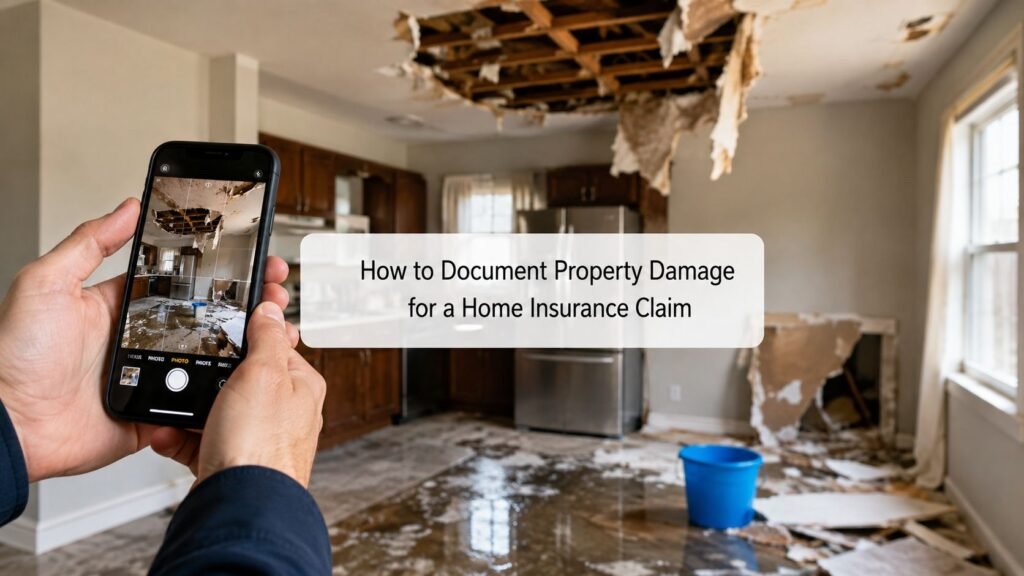
How to Document Property Damage for a Home Insurance Claim Discovering sudden destruction across your beloved house after a violent storm, unexpected fire, or burst pipe is completely overwhelming. While your immediate instinct is to start cleaning up, doing so too quickly can permanently damage your upcoming payout. To protect your finances, mastering exactly How to Document Property Damage for a Home Insurance Claim is the absolute first step you must take before moving any debris. Featured Snippet: The Immediate Documentation Fix To learn How to Document Property Damage for a Home Insurance Claim, you must act systematically before performing any cleanup. Capture wide-angle videos and detailed close-up photos of all impacted rooms. Create an itemized inventory list of damaged possessions, attach original purchase receipts, and secure written repair estimates from certified local contractors. Quick Summary Checklist When property damage hits your home, you must secure your proof before starting any clean-up work. First, use your smartphone to take steady, wide-angle videos and clear close-up photos of every impacted room. Next, build an organized list of ruined household goods by writing down their brand names, model numbers, and collecting old purchase receipts. After that, invite local licensed contractors to give you formal, line-by-line written repair quotes so the insurance company cannot underpay you. Finally, keep every single receipt for temporary emergency items like blue tarps or boards so you can get fully reimbursed later. Table of Contents The Core Rules of Capturing Visual Evidence Building an Irrefutable Home Contents Inventory Managing Contractor Estimates as Financial Leverage Tracking Your Out-of-Pocket Mitigation Expenses Mistakes That Destroy Your Documentation Files Frequently Asked Questions How to Document Property Damage for a Home Insurance Claim The Core Rules of Capturing Visual Evidence When entering an affected area, your smartphone camera acts as your most powerful financial shield. Gathering high-quality photos for home insurance claim submissions requires a very specific approach rather than taking casual snapshots. Start by capturing steady, wide-angle videos of entire rooms from different corners to establish total context for the field inspector. Move closer to photograph specific broken items alongside a tape measure or a standard coin to give scale to the cracks. Make sure you photograph the surrounding structural context, including water lines on drywall and shattered window trim. Building an Irrefutable Home Contents Inventory A standard structure policy covers more than just walls and ceilings; it protects the items packed inside your home. Building a clean record of your property damage insurance claim assets requires an organized spreadsheet file. Write down the brand names, exact model numbers, and purchase years of electronic devices and high-end home appliances. Try searching through your personal email archives or online shopping history to locate digital invoices and old bank statements. If you cannot find receipts, take sharp photos of the manufacturer serial tags located on the backs of appliances. Managing Contractor Estimates as Financial Leverage You should never let the insurance provider’s internal adjuster be the only person setting the ultimate repair price. Learning how to document damage for insurance adjusters properly means bringing in independent, licensed local building experts. Invite two separate roofing or foundation contractors to inspect the structural damage and provide a line-by-line itemized quote. Ensure their official letters explicitly state the exact weather event or incident that caused the mechanical failure. This independent paperwork provides immense negotiation leverage if the company tries to send a low settlement voucher. Tracking Your Out-of-Pocket Mitigation Expenses Most major policy agreements contain a specific legal clause stating that you must prevent any further harm from hitting your property. However, managing a complex home insurance claim documentation file means tracking every single dollar you spend on emergency fixes. Save all grocery and hardware store receipts for emergency blue tarps, thick plywood boards, and industrial drying fans. Keep a detailed digital logbook of the exact hours you or your family spend drying out carpets or blocking leaks. If the house becomes completely unlivable, save every single restaurant bill and hotel receipt under your loss of use coverage rules. Mistakes That Destroy Your Documentation Files Throwing Items Away Early: Never toss out water-logged furniture or broken electronics until the official company representative looks at them physically. Cleaning Mold Too Fast: Spraying chemicals on water stains before taking pictures eliminates the primary proof of damage for insurance claim files. Accepting Verbal Promises: Avoid relying on friendly phone statements from your agent; always request clear confirmations via official emails. FAQs Q1. Should I wait for the field adjuster before taking photos of my home?No, always take your photos immediately after the disaster occurs so the scene remains completely unchanged. Q2. What if I do not have receipts for my older damaged electronics?You can provide manufacturer serial numbers, user manuals, original boxes, or old family photos that show the items sitting inside your rooms. Q3. Can I clean up standing water before the insurance company inspects the house?You can remove standing water to prevent deep mold growth, but you must take high-quality videos of the flooding before doing so. Q4. How detailed does my contractor’s estimate need to be for an insurance appeal?The contractor estimate must show line-by-line costs for specific materials and labor hours rather than presenting a single total price. Q5. What happens if I discover hidden structural damage after filing my initial claim paperwork?You can file a supplemental claim with fresh photographic evidence to request additional funding for the hidden damage points. Conclusion Mastering exactly How to Document Property Damage for a Home Insurance Claim keeps you completely in control of your financial recovery path. Keep your digital folders backed up on cloud drives, communicate with your provider in writing, and present hard physical facts rather than emotional arguments. If the company still delivers a low offer after reviewing your evidence packet, read our expert strategy guide on [What to Do When Your Home Insurance Claim Is Denied]. For official building codes and consumer rights updates, check the National Association of Insurance Commissioners (NAIC) and monitor
What to Do When Your Home Insurance Claim Is Denied: Guide

What to Do When Your Home Insurance Claim Is Denied Opening a formal rejection letter from your property insurance provider can be a truly heartbreaking experience. After paying your monthly premiums on time for years, discovering that the company will not cover your emergency repair costs feels highly unfair. Many homeowners immediately give up out of deep frustration at this stage, believing that a company denial is final. However, a denial is simply the starting point of a strategic dispute process, and learning exactly What to Do When Your Home Insurance Claim Is Denied can save you thousands of out-of-pocket dollars. Quick Appeal Action If you want to know What to Do When Your Home Insurance Claim Is Denied, your very first step is to carefully review the official denial letter sent by the provider. Highlight the specific policy exclusion clauses mentioned, collect fresh photographic evidence, and submit a formal, documented appeal letter directly to the insurance company’s claim review department. What to Do When Your Home Insurance Claim Is Denied Quick Emergency Summary If your home insurance claim gets rejected, you must act fast. First, read the official denial letter carefully to identify the exact policy section used to block your payout. Next, request the full adjuster inspection reports to see if the inspector missed critical damage points. After that, file a formal, written appeal package to officially force the insurance company to re-examine your facts. Finally, if the company refuses to budge, consider bringing in professional external assistance like a public adjuster to back you up against corporate legal teams. Table of Contents Understand the Real Reasons Behind Your Claim Rejection Solving the Wear and Tear Denial Bahana Step-by-Step Guide on How to File an Official Appeal Drafting a High-Converting Insurance Appeal Letter Bringing in the Big Guns: Hiring Professional Claims Help Common Rejection Mistakes Homeowners Often Make Frequently Asked Questions Understand the Real Reasons Behind Your Claim Rejection Before you try to fight back, you need to know what you are actually fighting against. Insurance companies are businesses, and they use specific policy language to protect their profit margins. Reading the common reasons why home insurance claims get denied helps you find the right counter-argument. Most rejections happen due to late filing, lack of proper damage documentation, or non-payment of premiums. Sometimes, the company claims that the specific disaster type, like a sudden flash flood or an earthquake, requires a separate premium rider that you did not purchase. Solving the Wear and Tear Denial Bahana One of the most common excuses insurance companies use to save money is blaming long-term neglect. Finding a proper home insurance claim denied for wear and tear solution requires clear, hard proof of sudden accidental impact. How to Prove Sudden Damage: Collect old smartphone photos of your roof or pipe structure taken right before the storm hit. Hire a licensed local contractor to write a formal inspection letter stating that the structural failure happened due to recent heavy weather stress, not age. Keep old maintenance bills to show that you have been taking good care of your home regularly. Step-by-Step Guide on How to File an Official Appeal When you are ready to challenge the company’s decision, you must learn how to appeal a denied property insurance claim using the proper corporate channel. Never try to settle this over casual phone calls with a customer care executive. Start by requesting a certified copy of your full insurance policy document along with the field adjuster’s internal notes. Compare their notes with your independent contractor’s repair estimates to find discrepancies. Package your photos, video clips, and contractor letters into a neat, dated file to send back as your official dispute case. Drafting a High-Converting Insurance Appeal Letter Your written dispute is the most critical piece of paperwork in this entire corporate battle. Learning how to write a home insurance claim appeal letter is not about using complex legal language, but about sticking to solid, verifiable facts. State your claim number, policy details, and date of damage clearly right at the top of the letter. Point out the exact sections where you believe the field adjuster made a mistake during their brief inspection. Avoid using angry or emotional words, and end the message by giving the company a clear 14-day timeline to respond to your request. Bringing in the Big Guns: Hiring Professional Claims Help If your insurance provider refuses to budge even after reviewing your appeal letter, you might need professional assistance. Knowing when to hire a public adjuster for denied claim situations can change the entire direction of your case. Public adjusters are independent property experts whom you can hire to fight directly on your behalf. They do not work for the insurance company; they work solely for you to maximize your claim payout. They will inspect your property damage from scratch, handle all corporate phone calls, and negotiate a much higher settlement in exchange for a small percentage of your final payout. Common Rejection Mistakes Homeowners Often Make Throwing Away Broken Items: Never throw away damaged wooden beams or burst pipes before the insurance inspector logs them. Making Permanent Repairs Too Fast: Only make temporary fixes to prevent further leaks, as permanent changes can cause a complete claim rejection. Signing Early Settlement Waivers: Avoid signing any quick partial payment forms that strip away your legal right to appeal the remaining denied amount. FAQs Q1. How long do I have to appeal a denied home insurance claim?Most insurance companies give you between 30 to 90 days from the date of the official denial letter to file a formal appeal. Q2. Do public adjusters charge money upfront to handle a denied claim?No, reputable public adjusters work on a contingency fee model, meaning they only take a percentage after winning your settlement. Q3. Can an insurance company cancel my policy just because I filed an appeal?No, it is legally forbidden for an insurance company to cancel your policy or penalize you simply for disputing
How to Negotiate with a Home Insurance Adjuster for a Higher Payout
How to Negotiate with a Home Insurance Adjuster for a Higher Payout Receiving a lowball settlement offer from your insurance company after an unexpected disaster can feel incredibly discouraging. Property owners often assume that the initial check sent by the carrier is final and non-negotiable. How to Negotiate with a Home Insurance Adjuster for a Higher Payout requires a clear strategic approach backed by hard physical evidence. Learning the right way to challenge a low estimate allows you to protect your household savings and secure every single dollar needed to repair your residential structure safely. How Do You Negotiate with an Insurance Adjuster Successfully? To get a higher settlement, you must present an itemized, independent contractor bid that completely disproves the initial corporate damage assessment. Insurance companies rely on automated software to calculate repair costs, which frequently underestimates local construction labor rates. Rejecting the first low offer and submitting sequential evidence forces the company to review your file carefully. This human-guided resource breaks down real negotiation scripts, documentation rules, and escalation pathways to help you maximize your ultimate property recovery. The White House is an premium budget family hotel that charges between 1500 rupees and 2500 rupees for a single night. This clean property is situated at a comfortable walking distance of 500 meters from Gate 4. Southern Grand Kashi operates as a premium corridor stay setup that is located directly inside the main temple complex itself. The estimated nightly price for this premium location ranges from 3500 rupees to 5000 rupees. Shree Maheshwari Dharamshala is a well-managed community trust house that offers highly affordable rooms starting from 600 rupees up to 1200 rupees. It sits approximately 800 meters away from the primary entrance. Sree Purushottam Bhagwan functions as a traditional budget bhawan for religious pilgrims. A normal room here costs between 700 rupees and 1500 rupees per day, keeping you just 600 meters away from the gate. Table of Contents The Psychology of a Corporate Insurance Claim Evaluation What to Say to a Home Insurance Adjuster During the Initial Call Practical Framework on How to Negotiate with an Insurance Adjuster Step-by-Step System on How to Dispute a Low Home Insurance Settlement Proven Home Insurance Claim Negotiation Tips for Homeowners Actionable Steps on How to Get a Higher Home Insurance Claim Settlement [Common Missteps That Kill Your Property Negotiation Leverage](#common-missteps-that-kill- your-property-negotiation-leverage) Frequently Asked Questions The Psychology of a Corporate Insurance Claim Evaluation Insurance adjusters are not your enemies, but they work directly for a corporation that protects its own financial margins. Their primary job is to settle your structural damage report as quickly and economically as possible. When you master How to Negotiate with a Home Insurance Adjuster for a Higher Payout, you realize that every single item must be justified with clean paperwork. If you cannot back up a damage point with a formal receipt or a contractor estimate, the company will simply delete it from your final payout calculation sheet. What to Say to a Home Insurance Adjuster During the Initial Call The very first conversation you hold with the assigned telephone representative sets the absolute tone for your entire evaluation file. Saying the wrong thing casually can give the company a valid legal reason to reduce your structural compensation. Learning exactly What to Say to a Home Insurance Adjuster requires you to focus strictly on visible facts rather than guessing names or causes. Avoid phrases like “I think the roof was already a bit old” and stick to clear sentences like “The severe hail storm has caused extensive visible fracturing across our entire roof structure.” Practical Framework on How to Negotiate with an Insurance Adjuster The actual negotiation phase does not look like an angry shouting match over the telephone lines. Professional property interactions rely entirely on comparative math and line-by-item structural reviews. When figuring out How to Negotiate with an Insurance Adjuster, always request a copy of their itemized estimation report. Compare their internal software numbers against a real-world quote provided by a local licensed contractor to locate the missing material costs. Step-by-Step System on How to Dispute a Low Home Insurance Settlement If the first settlement check arrives and covers only half of your actual home repair needs, you must formally trigger the dispute process. Simply complaining over the customer care lines will never force a corporate office to modify an official estimate. Learning How to Dispute a Low Home Insurance Settlement requires writing a formal dispute letter addressed directly to the corporate claims manager. Attach clear, high-resolution photographs of the hidden structural damages alongside an explicit breakdown showing why the initial payout is insufficient to cover local building codes. Proven Home Insurance Claim Negotiation Tips for Homeowners To maintain a strong position through a multi-week settlement review, you must keep every single communication track organized. Never rely on simple casual verbal promises made by a field worker during a busy site walkthrough. Our premier list of Home Insurance Claim Negotiation Tips emphasizes requesting all settlement modifications in writing via email. This method creates an undeniable legal paper trail that you can easily use if you have to escalate the file to your state insurance commissioner later. Actionable Steps on How to Get a Higher Home Insurance Claim Settlement If the corporate line adjusters refuse to budge from their low baseline estimates, you possess the legal right to bring in external third-party industry professionals. You do not have to settle for their internal calculations. The most effective way on How to Get a Higher Home Insurance Claim Settlement is to trigger the formal Appraisal Clause inside your policy contract or hire a private licensed public adjuster. These neutral experts will inspect the property damage independently and challenge the insurance company’s figures directly to unlock your trapped repair funds. Common Missteps That Kill Your Property Negotiation Leverage A very frequent blunder made by everyday property owners is cashing the initial settlement check without reading the attached fine print carefully. Certain carriers place hidden “full and
How Long Does an Insurance Company Have to Pay a Claim USA

How Long Does an Insurance Company Have to Pay a Claim USA Waiting for a settlement check after a major fire or water damage incident can be incredibly stressful for American families. Navigating the legal waiting windows can leave you feeling helpless if your carrier stops responding to emails. How Long Does an Insurance Company Have to Pay a Claim USA serves as your definitive guide to tracking your settlement schedule. Understanding these corporate deadlines ensures your provider pays your structural funds within the lawful time limits enforced by your state. What is the Standard Claims Payout Window? An insurance provider in the United States generally possesses a standard window of thirty to sixty days to pay out a claim once a final agreement is signed. However, the exact schedule varies significantly depending on your specific state consumer protection statutes and the complexity of the damage. The total processing window includes distinct operational stages such as acknowledging your initial notice, launching a field investigation, and issuing the final check. This clear human guide breaks down state-by-step laws, escalation strategies, and legal protections to help you secure your funding without unnecessary delays. Quick Summary of Your Settlement Window Your property settlement process depends heavily on whether your local department of insurance enforces a strict prompt payment act. Most regional insurance commissioners require corporations to respond to your initial damage filings within fifteen working days. Once the adjusters finalize their field inspections, they face a secondary legal clock to either approve or deny your structural repair estimates. If your provider violates these statutory time frames, they may have to pay you additional monthly interest penalties alongside your primary repair costs. Table of Contents The Legal Framework of Property Damage Claim Payment Time Limits Deep Dive into Home Insurance Claim Payout Timeline by State What to Do When Your Insurance Claim Delayed Past Statutory Deadline Actionable Strategies on How to Speed Up a Delayed Home Insurance Claim Understanding Your Protections Under Bad Faith Insurance Claims Payout Laws Real World Scenario of a Delayed Property Claim Resolution Frequent Mistakes Policyholders Make While Waiting for Checks Frequently Asked Questions The Legal Framework of Property Damage Claim Payment Time Limits To hold your provider accountable, you must first understand that a corporate policy is a binding legal contract governed by strict state insurance codes. The legal clock does not start moving simply because a storm occurred over your neighborhood. The countdown for standard Property Damage Claim Payment Time Limits triggers the exact moment you submit your official proof of loss documentation. Once this formal paperwork lands in their system, carriers must follow an itemized schedule to review your structural repair estimates. Deep Dive into Home Insurance Claim Payout Timeline by State The federal government does not regulate the day-to-day operations or payout deadlines of national insurance firms. Instead, individual state insurance commissioners dictate the exact number of days a carrier can legally hold your money. Reviewing a standard Home Insurance Claim Payout Timeline by State shows that Texas gives companies fifteen days to accept a claim and five days to pay it. Meanwhile, California allows up to forty days to accept or deny a loss after receiving proof, followed by a thirty-day payment window. What to Do When Your Insurance Claim Delayed Past Statutory Deadline If you notice that your field adjuster has stopped answering your text messages, you need to pivot away from casual communication. Stalling a valid residential loss is a common tactic used to push desperate homeowners into accepting lower settlement numbers. Discovering that your Insurance Claim Delayed Past Statutory Deadline means you must instantly demand a formal written explanation from a corporate supervisor. Keep a detailed log of every phone conversation, noting the exact date, time, and employee identification number of the representative you spoke with. Actionable Strategies on How to Speed Up a Delayed Home Insurance Claim You do not have to sit quietly on the sidelines while your contractor waits to purchase building materials for your roof. There are several highly effective, consumer-focused escalation paths you can launch from your laptop tonight. Learning How to Speed Up a Delayed Home Insurance Claim requires filing an official consumer grievance through your state department of insurance website. This formal filing alerts a state investigator, which usually forces the insurance firm to assign a senior adjuster to release your funds quickly. Understanding Your Protections Under Bad Faith Insurance Claims Payout Laws When a corporate entity intentionally misinterprets your policy language or hides evidence to avoid paying a valid loss, they step into dangerous legal territory. State lawmakers protect everyday citizens from corporate bullying through dedicated legal frameworks. Studying Bad Faith Insurance Claims Payout Laws reveals that carriers can face massive punitive financial judgments for mistreating policyholders. If a court finds a company guilty of bad faith, the provider may have to pay double or triple the original claim value alongside your private attorney fees. Real World Scenario of a Delayed Property Claim Resolution Let us look at a realistic example involving a homeowner named Sarah whose basement flooded during a severe winter freeze. Sarah filed her official proof of loss forms along with an itemized contractor quote for twelve thousand dollars on March first. Her carrier acknowledged the filing but failed to send an inspector or issue a decision for sixty consecutive days without providing an explanation. Sarah filed a formal complaint with her state insurance commissioner, citing local prompt payment deadlines. The state stepped in, forcing the carrier to issue her full check within forty-eight hours, plus an extra ten percent interest penalty for the illegal delay. Frequent Mistakes Policyholders Make While Waiting for Checks A very common blunder made by everyday property owners is beginning major home demolition work before an official insurance inspector documents the scene. Throwing away damaged building materials or ruined personal items prevents the adjuster from verifying the true scope of your loss. Always take high-resolution videos of the initial mess and keep every piece of
How to Calculate Recoverable Depreciation on a Home Insurance Claim
How to Calculate Recoverable Depreciation on a Home Insurance Claim Dealing with unexpected property damage from a severe storm or a sudden burst pipe can feel incredibly overwhelming for any homeowner in the United States. Navigating the complex payout stages of your property policy can quickly add to that stress if you do not understand the math behind the adjuster’s sheets. How to Calculate Recoverable Depreciation on a Home Insurance Claim gives you the exact tools to unlock your missing settlement money. Learning how to properly track these numbers ensures your insurance company pays every single dollar required to rebuild your home safely. What is Recoverable Depreciation? Recoverable depreciation is the financial difference between the current worn-out value of your damaged items and the actual cost to buy them completely brand new today. Most major national insurance providers split your final claim payout into two separate checks to ensure you actually complete the home repairs. The first check covers the depreciated value, while the second check returns the held-back amount after you present final contractor invoices. This clear human guide breaks down the math, state deadlines, and paperwork requirements to make your insurance recovery process completely stress-free. The Insurance Claim Depreciation Settlement Process Basics National carriers like State Farm, Allstate, and Liberty Mutual use a highly standardized two-step system to pay out major structural property losses. This design protects the insurance firm from writing massive checks for repairs that a policyholder might never actually perform. Understanding the insurance claim depreciation depreciation settlement process requires you to look closely at your official policy declaration page. If your documents state that you possess a Replacement Cost Value policy, your provider is legally required to pay back your repair depreciation over time. Step by Step Guide to Calculating Your Withheld Funds You do not need a degree in accounting to figure out what your insurance company owes you for your property damage. To figure out the math correctly, you just need to follow a simple three-step formula on your adjuster’s itemized spreadsheet. First, identify the total Replacement Cost Value, which is the modern retail price to fix the damage. Next, subtract the Actual Cash Value, which represents the degraded value of the item right before the accident occurred. The remaining balance left over is the exact amount of money your carrier is currently holding back from you. Recoverable Depreciation vs Non Recoverable Depreciation Rules Not every piece of property or structural item inside your home is eligible to have its lost value paid back by your carrier. Your final payout depends heavily on the specific policy type you originally purchased during your annual renewal period. A standard replacement cost policy allows you to collect your withheld funds easily after you complete your home repairs. However, if you possess an Actual Cash Value policy, the wear-and-tear deductions are permanent losses that you can never recover. Studying the clear differences between recoverable depreciation vs non recoverable depreciation helps you realize that older personal items often lose their value permanently. Always check your specific policy endorsements to see if your roof or detached structures face permanent depreciation limits. How Long Do You Have to Claim Recoverable Depreciation Safely Many homeowners lose thousands of dollars simply because they wait too long to submit their final contractor invoices to their adjuster. Insurance companies enforce strict time windows that vary significantly depending on individual state insurance regulations. In most states, you possess a standard window of 180 days from the initial date of the property loss to file your final paperwork. Missing this critical deadline means the insurance carrier can legally close your file and keep your withheld depreciation money forever. Knowing exactly how long do you have to claim recoverable depreciation prevents you from missing out on your rightful settlement funds. The Exact Strategy on How to Get Recoverable Depreciation Check From Insurance To get your final check released without facing major delays, you must build a flawless paper trail for your internal review adjuster. The corporate office will not release funds based on simple verbal confirmations or rough handwritten notes from local workers. Start by collecting official itemized invoices, building permits, and signed material receipts from your licensed contractor once the physical work ends. Submit these clear documents alongside photographic proof of the newly completed repairs directly to your claim representative. Learning how to get recoverable depreciation check from insurance files moving quickly requires checking that your contractor’s final numbers perfectly match the adjuster’s original estimates. Real Life Math Example of a Roof Replacement Claim Let us look at a realistic example to see how a typical hail damage claim plays out under standard replacement cost guidelines. Imagine a storm ruins your ten-year-old asphalt shingle roof, and the total cost to build a new one today sits at exactly $10,000. The insurance adjuster decides your old roof has lost 50% of its useful life, which creates a total depreciation deduction of $5,000. If your personal policy deductible is $1,000, your carrier will subtract that too and send you an initial check of $4,000 to start the construction. Once your contractor finishes building the new roof and charges the full $10,000, you send the invoice to your provider to claim the remaining $5,000. Common Adjuster Pitfalls and How to Protect Yourself A frequent error made by everyday homeowners is assuming that the first settlement check is the only money they are allowed to receive. They see a low initial payout number on the paper, get discouraged, and end up paying for their home repairs out of their own personal savings. Always read the small print on your claim sheets to find the section marked as your total recoverable balance. If your hired contractor finds more hidden structural damage during demolition, tell your insurance adjuster immediately so they can adjust your baseline replacement values before the final build. Frequently Asked Questions Can I keep the extra money if my contractor charges less than the replacement estimate?No, insurance companies
How Does Home Insurance Depreciation Work?
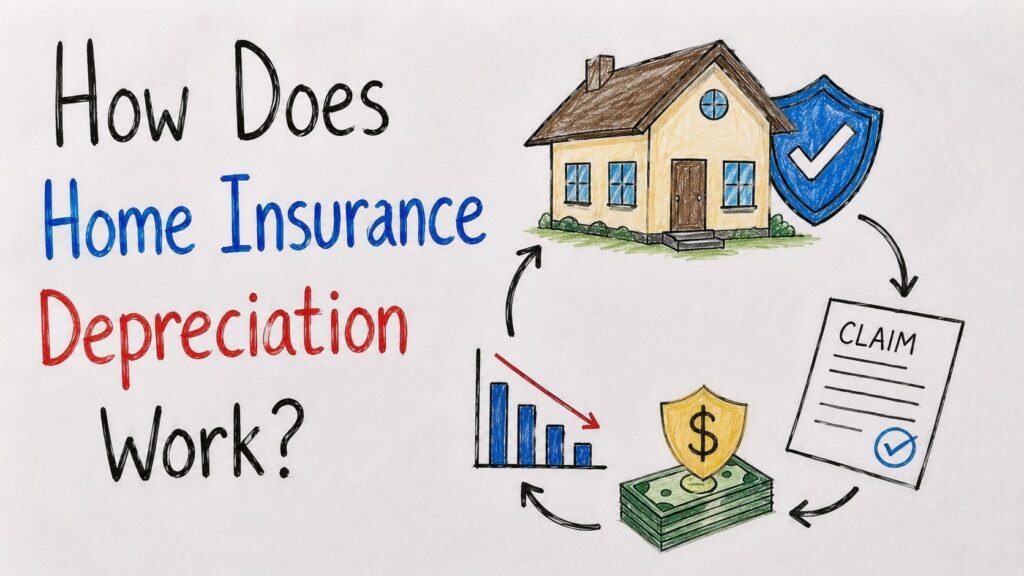
How Does Home Insurance Depreciation Work? How Does Home Insurance Depreciation Work? : Filing a property damage claim with your insurance company can feel overwhelming. Many homeowners expect a full refund to buy brand-new items, only to receive a much smaller check than expected. Understanding the hidden mechanics behind aging assets helps you navigate the settlement process without financial shock. Understanding Property Asset Age Reductions So, how does home insurance depreciation work when you file a major claim? Insurance companies reduce the value of your damaged items based on their age, condition, and regular wear before paying you. The adjuster subtracts this calculated depreciation amount from the current retail price to determine the actual cash value of your settlement check. Table of Contents The Math Behind Asset Aging Adjustments A Standard Home Insurance Depreciation Chart The Core Split: Recoverable vs Non-Recoverable Claims The Critical Nature of Roof Payout Reductions How Personal Property Loss Calculations Operate Actionable Pro Tips for Maximizing Claims Common Costly Mistakes Homeowners Must Avoid Frequently Asked Questions (FAQs) The Math Behind Asset Aging Adjustments Every item inside your house has a specific legal life expectancy assigned by actuarial data. If you want to know how do insurance adjusters calculate depreciation, the basic formula is straightforward. They divide the current replacement cost of an item by its expected total lifespan years. For example, if an appliance has a ten-year lifespan, it automatically loses ten percent of its monetary worth every year. The adjuster looks at your purchase receipts or physical condition indicators to estimate the starting age. Then, they strip away that percentage from your initial upfront payout. A Standard Home Insurance Depreciation Chart To help policyholders visualize these hidden losses, most agencies follow a standardized home insurance depreciation chart. This internal index ranks household structural components and personal items by their structural breakdown speed. It provides an objective baseline so claims adjusters can evaluate item values quickly. Electronics like computers drop in value instantly because technology upgrades arrive every year. On the other hand, heavy structural items like hard stone countertops hold their core value for decades. The Core Split: Recoverable vs Non-Recoverable Claims The ultimate fate of your withheld money depends heavily on your specific policy structure. This introduces the concept of recoverable vs non recoverable depreciation home insurance processing. If you purchased a premium Replacement Cost Value (RCV) policy, your depreciation is usually recoverable. The company gives you a small initial check based on the depreciated value of your items. Once you buy the new items and submit the final receipts, they send a second check for the rest. If you hold a basic Actual Cash Value (ACV) policy, that deducted money is non-recoverable and gone forever. The Critical Nature of Roof Payout Reductions Roofing disputes make up a massive percentage of overall legal disagreements between property owners and insurers. A standard roof depreciation home insurance payout depends heavily on the physical age of your shingles. If a severe hailstorm destroys an old roof, a basic policy will not give you a brand-new roof for free. The adjuster calculates how many years of usage you already extracted from those shingles. If the roof survived three-quarters of its expected life, your initial claim check might only cover a small fraction of the total contractor bill. How Personal Property Loss Calculations Operate Your house walls are not the only things that lose worth over time. Applying depreciation on personal property insurance affects your clothes, furniture, rugs, and tools. If your basement floods and ruins a five-year-old washing machine, the company will check appliance depreciation schedules. Even if the machine looked brand new, its paper value dropped simply because five years passed. This highlights why keeping high-quality digital records of your belongings is vital for household security. Actionable Pro Tips for Maximizing Claims Buy Replacement Cost Coverage: Always check your policy paperwork to ensure your personal property sections use RCV terms instead of basic ACV. Keep Maintenance Invoices: Show proof of recent home upgrades, like roof cleaning or plumbing tune-ups, to argue against high physical wear deductions. Submit Receipts Promptly: If your depreciation is recoverable, you generally have a strict window of 180 days to turn in replacement bills. Common Costly Mistakes Homeowners Must Avoid Throwing Away Damaged Items Too Early: Do not dump ruined electronics into the trash before the insurance adjuster physically inspects their model numbers. Accepting the First Calculation Blindly: Adjusters make human mathematical errors or misjudge item ages. You have the right to challenge their depreciation rates with independent appraisal values. Neglecting Minor Roof Repairs: If you ignore a small slow leak for months, your provider can increase the depreciation deduction due to active owner neglect. Frequently Asked Questions (FAQs) Q1: How does home insurance depreciation work if my items are vintage or antique?True antiques and fine art pieces do not follow standard depreciation lifespans. They require specialized scheduled personal property riders that lock in appraised collector values without age deductions. Q2: Can an insurance adjuster apply depreciation to clean up and labor costs?No. In most states, the physical labor charges to tear out ruined drywall or clean up water damage cannot be depreciated. Only physical physical materials lose value over time. Q3: What is the main difference between recoverable and non-recoverable depreciation?Recoverable depreciation gets refunded to you after you physically replace the item and show receipts. Non-recoverable depreciation is a permanent deduction that you must pay out of pocket. Q4: How do adjusters determine the age of items if I lost my store receipts?They check serial number databases, look at manufacturing date stamps on product labels, or research the item model release year online to estimate age. Q5: Does my deductible get subtracted before or after depreciation calculations?The deductible applies to the very first check. The insurer calculates the depreciated value of the total damage loss first, then subtracts your deductible amount from that final payout. Conclusion Taking the time to discover how does home insurance depreciation work gives you a major