
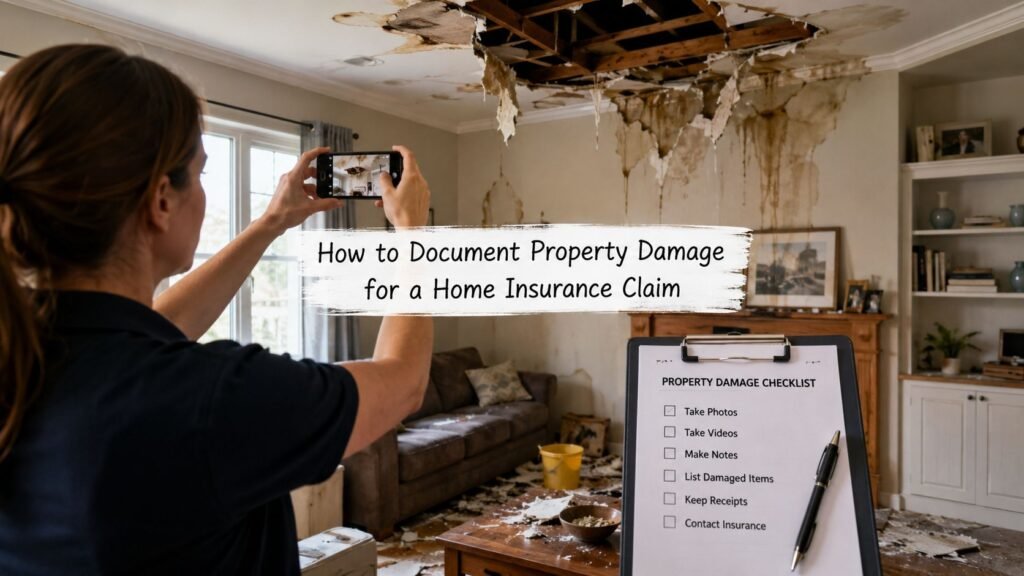
 How to Document Property Damage for a Home Insurance Claim
Discovering sudden destruction across your beloved house after a violent storm, unexpected fire, or burst pipe is completely overwhelming. While your immediate instinct is to start cleaning up, doing so too quickly can permanently damage your upcoming payout.
To protect your finances, mastering exactly How to Document Property Damage for a Home Insurance Claim is the absolute first step you must take before moving any debris.
Featured Snippet: The Immediate Documentation Fix
To learn How to Document Property Damage for a Home Insurance Claim, you must act systematically before performing any cleanup. Capture wide-angle videos and detailed close-up photos of all impacted rooms. Create an itemized inventory list of damaged possessions, attach original purchase receipts, and secure written repair estimates from certified local contractors.
Quick Summary Checklist
When property damage hits your home, you must secure your proof before starting any clean-up work. First, use your smartphone to take steady, wide-angle videos and clear close-up photos of every impacted room. Next, build an organized list of ruined household goods by writing down their brand names, model numbers, and collecting old purchase receipts. After that, invite local licensed contractors to give you formal, line-by-line written repair quotes so the insurance company cannot underpay you. Finally, keep every single receipt for temporary emergency items like blue tarps or boards so you can get fully reimbursed later.
Table of Contents
- The Core Rules of Capturing Visual Evidence
- Building an Irrefutable Home Contents Inventory
- Managing Contractor Estimates as Financial Leverage
- Tracking Your Out-of-Pocket Mitigation Expenses
- Mistakes That Destroy Your Documentation Files
- Frequently Asked Questions
How to Document Property Damage for a Home Insurance Claim
The Core Rules of Capturing Visual Evidence
When entering an affected area, your smartphone camera acts as your most powerful financial shield. Gathering high-quality photos for home insurance claim submissions requires a very specific approach rather than taking casual snapshots.
Start by capturing steady, wide-angle videos of entire rooms from different corners to establish total context for the field inspector. Move closer to photograph specific broken items alongside a tape measure or a standard coin to give scale to the cracks. Make sure you photograph the surrounding structural context, including water lines on drywall and shattered window trim.
Building an Irrefutable Home Contents Inventory
A standard structure policy covers more than just walls and ceilings; it protects the items packed inside your home. Building a clean record of your property damage insurance claim assets requires an organized spreadsheet file.
Write down the brand names, exact model numbers, and purchase years of electronic devices and high-end home appliances. Try searching through your personal email archives or online shopping history to locate digital invoices and old bank statements. If you cannot find receipts, take sharp photos of the manufacturer serial tags located on the backs of appliances.
Managing Contractor Estimates as Financial Leverage
You should never let the insurance provider’s internal adjuster be the only person setting the ultimate repair price. Learning how to document damage for insurance adjusters properly means bringing in independent, licensed local building experts.
Invite two separate roofing or foundation contractors to inspect the structural damage and provide a line-by-line itemized quote. Ensure their official letters explicitly state the exact weather event or incident that caused the mechanical failure. This independent paperwork provides immense negotiation leverage if the company tries to send a low settlement voucher.
Tracking Your Out-of-Pocket Mitigation Expenses
Most major policy agreements contain a specific legal clause stating that you must prevent any further harm from hitting your property. However, managing a complex home insurance claim documentation file means tracking every single dollar you spend on emergency fixes.
Save all grocery and hardware store receipts for emergency blue tarps, thick plywood boards, and industrial drying fans. Keep a detailed digital logbook of the exact hours you or your family spend drying out carpets or blocking leaks. If the house becomes completely unlivable, save every single restaurant bill and hotel receipt under your loss of use coverage rules.
Mistakes That Destroy Your Documentation Files
- Throwing Items Away Early: Never toss out water-logged furniture or broken electronics until the official company representative looks at them physically.
- Cleaning Mold Too Fast: Spraying chemicals on water stains before taking pictures eliminates the primary proof of damage for insurance claim files.
- Accepting Verbal Promises: Avoid relying on friendly phone statements from your agent; always request clear confirmations via official emails.
FAQs
Q1. Should I wait for the field adjuster before taking photos of my home?
No, always take your photos immediately after the disaster occurs so the scene remains completely unchanged.
No, always take your photos immediately after the disaster occurs so the scene remains completely unchanged.
Q2. What if I do not have receipts for my older damaged electronics?
You can provide manufacturer serial numbers, user manuals, original boxes, or old family photos that show the items sitting inside your rooms.
You can provide manufacturer serial numbers, user manuals, original boxes, or old family photos that show the items sitting inside your rooms.
Q3. Can I clean up standing water before the insurance company inspects the house?
You can remove standing water to prevent deep mold growth, but you must take high-quality videos of the flooding before doing so.
You can remove standing water to prevent deep mold growth, but you must take high-quality videos of the flooding before doing so.
Q4. How detailed does my contractor’s estimate need to be for an insurance appeal?
The contractor estimate must show line-by-line costs for specific materials and labor hours rather than presenting a single total price.
The contractor estimate must show line-by-line costs for specific materials and labor hours rather than presenting a single total price.
Q5. What happens if I discover hidden structural damage after filing my initial claim paperwork?
You can file a supplemental claim with fresh photographic evidence to request additional funding for the hidden damage points.
You can file a supplemental claim with fresh photographic evidence to request additional funding for the hidden damage points.
Conclusion
Mastering exactly How to Document Property Damage for a Home Insurance Claim keeps you completely in control of your financial recovery path. Keep your digital folders backed up on cloud drives, communicate with your provider in writing, and present hard physical facts rather than emotional arguments. If the company still delivers a low offer after reviewing your evidence packet, read our expert strategy guide on [What to Do When Your Home Insurance Claim Is Denied]. For official building codes and consumer rights updates, check the National Association of Insurance Commissioners (NAIC) and monitor standard disaster recovery advisories on the Federal Emergency Management Agency (FEMA) official knowledge center.